
 4 weeks ago
21
4 weeks ago
21
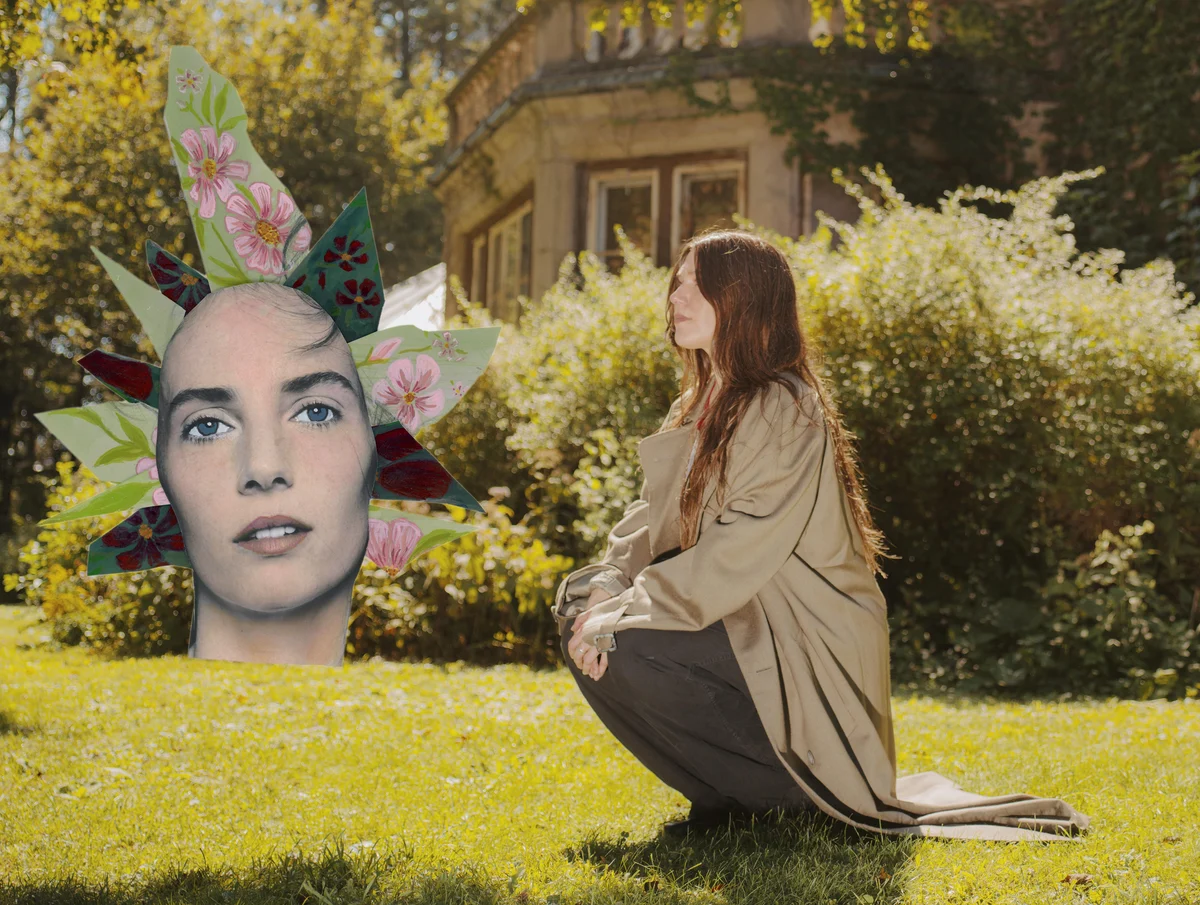

Maya Hawke and Gia Margaret both released their fourth albums within a few days of each other.
In Hawke’s record, Maitreya Corso, hues of The Postal Service burble into Laurel Canyon ochres and echoes. She channels folk legend Judee Sill inside and out – one of numerous reference points she shares with Margaret – and created a treasure map kingdom for fans to explore. You could boil down the album’s whip-smart lyrical wisdom – poised, profound, and puppyish – to a line Margaret plucks out from the closing track: “I am falling in love with my life.”
Maitreya Corso is a joyful and hopeful album, the sound of knowing exactly where you are while also feeling like you’re just getting started: wide-awake and ready to take on whatever comes next. Hawke wrote more of the music for this record than ever before, her confidence bolstered by a closer relationship with the guitar and by her husband and collaborator Christian Lee Hutson, who recognised and nurtured her strengths.
Margaret’s record could only be titled Singing. While touring in 2019, a severe vocal injury necessitated her making a total pivot to instrumental music. Her next two albums, Mia Gargaret and Romantic Piano, were almost totally absent conventional vocals, shaking out like the heavenly golden mean between Einaudi, Cassandra-Jenkins-in-ambient-mode, and one of Thomas Newman’s minimal, percussive film scores.
Romantic Piano was the record that made Hawke, a lyricist first and foremost, fall in love with instrumental music. She’d previously viewed instrumentation simply as a vehicle for poetry, but Margaret gave her a musical language and a newfound interest in the water keeping the boat afloat. Hawke describes Singing – on which Margaret reconnects with her voice and synthesizes all her brilliant work to date – as the queen entering the castle, running around the ramparts and adding colour. A castle is complete by itself, but it’s even more special when the queen is home. Hearing Margaret’s voice again on Singing, after two albums without it, there’s a sense of I didn’t realise how much I missed this. It’s a gorgeous, powerful, enveloping album, one of the best of the year.
Sign up to Best Fit's Substack for regular dispatches from the world of pop culture
Over the years, both artists have weathered phases of runaway inspiration as much as they have creative droughts. They agree on the need to feed your brain with variety – touring or listening or learning; acting jobs for Hawke. Margaret is motivated by the here and now, hopping on the piano stool or looping a meditative guitarscape when inspiration strikes. She also says that hearing Hawke’s voice makes her want to sing. Hawke thinks about “that tiny idea that this record could change the world,” believing a kernel of this should be in your mind the whole time you’re creating. It’s a more realistic goal than it may initially seem, given Romantic Piano very much did that for her – and the work of Joni Mitchell and Imogen Heap did that for the both of them.
When the pair meet Best Fit for this virtual coffee date, Margaret is about to head out on tour. Her friend Gabby drops over some supplies part way through. Hawke, meanwhile, is in the thick of a US run, dialling in from a hotel room. She trips over apologies for being a few minutes late, having overslept despite her best intentions and alarms. But even pre-coffee, she fizzes with energy and enthusiasm. Margaret, chilling cross-legged in front of her piano at home in Chicago, is thoughtful, peaceful, and engaged.
The two artists trade life-affirming-level wisdom for almost 90 minutes, discussing their evolving, often challenging relationship with their own voice and how their balanced skills – Margaret’s writing experience, Hawke’s confidence in the editing process – would add up to the ideal musical partnership.
MAYA HAWKE: Tour is so wonderful, and it's so wild to try to play new songs for people. I really wanted to go on this tour in small venues and to play new songs where you are really sharing the album with people in real time. People just stand there and listen and ask questions. It's really fun. I'm loving it.
BEST FIT: That's so nice. Are you getting to meet people after the shows, at the merch stand or whatever?
HAWKE: I'm really meeting people during the shows. I'm doing a lot of ‘bits’ and stopping and talking. I'm classically really scared about my voice, as I have nodes and I just get really worried about when I go after the show and talk for an hour, doing the line, I can't speak the next day.
GIA MARGARET: Talking is sometimes harder than singing.
HAWKE: Way harder! There's nothing worse for your voice than late-night talking.
MARGARET: Yeah, and you've already sung for over an hour, probably, and really need to not talk after and go to sleep.
HAWKE: I'm such a desperate people pleaser that I just talk to people for hours. I won't leave until they're all gone if I go out there. So instead of going out there, I tell them all, when I walk off the stage, please don't wait for me. I will not come.
MARGARET: You gotta look after yourself, because you've got shows to play and more music to share with people.
HAWKE: You can build windows of time. On my days off, I'm doing signings and photos and I'm trying to learn how to turn this into something I can do. I don't like to do the lines at the end of the night because of my voice. But what could I do? I can try to build something that is more doable.
MARGARET: I think that's the only way to have longevity in this career, is just to know yourself and know the things you can and can't do, otherwise you just burn out and then you can't do any of it.
HAWKE: Exactly. That's been my big goal of this whole year – longevity and limits and figuring out how not to wake up and be like, why did my past self screw me over so hard? And then your present self screws over your future self because they're tired and put stuff off. I'm working on having my past self be good to my present self.
MARGARET: I love that.

BEST FIT: Maya, you suggested Gia for this In Conversation. Not to put you on the spot, but what was it about Gia's work that you connected with and made you keen for the conversation?
HAWKE: I wanted to talk to you, Gia, because I love your new album, but Romantic Piano [2023] has been the soundtrack of the last two years of my life. I'm so moved by your story about singing and your voice, and the comings and goings of one's voice. Because I've really, really struggled with this and continue to. I really just love your music, and I'm very moved by the way that you make it. I wanted to get to make music together this past year, but then it didn't happen.
MARGARET: I was listening to your record this morning and thinking, I need to make music with this person. When I listen to your voice, I hear a lot of the voices that made me want to sing. It's like a blend of all the things that I like out of a voice. And I love the record and I love the production, but I feel like your voice is the throughline, the grounding thing, the thing that my ear is most stuck on while I'm listening to it.
HAWKE: Woah, that's crazy. I don't know about you, but I really struggle with my voice. I once saw this voice doctor, who sadly died, but he changed my life. He explained to me that my voice was my power centre – that's where I had the most pride in myself and had the most energy coming out of me. In my voice. When I got scared and nervous, my nerves would choke my power centre. Since I started going through these nodes episodes and these different huskiness periods, I really hate my voice, and I'm so mad at it for not being a Broadway belter. And it means so much to me to hear that. I wonder, do you want to talk a little bit about your journey with your voice?
MARGARET: I just want to say before that: those things that you are self-conscious about are the things that, I think, make your voice so special. I love the tone of your voice and the texture, and I love that you can sing so quietly and it resonates through instruments that it shouldn't resonate over. I feel like that huskiness is a bunch of crystals shining through everything And we don't think of our own voices that way ever, because you're so self-critical of your own voice, but those are the things that people are drawn to in your voice.
I know that's a weird concept or thing to think about, but I've had to notice those things in my own voice too, because going through all the trauma of vocal issues, it was harder for me to get moving again. I felt scared I was going to hurt myself again. I was extra careful, and then I felt like I needed to come back stronger. I put all this pressure on myself to be better than ever, because I’d spent all this time healing.
Really, the only thing that healed me was accepting where I was at with my voice. That was the thing that helped me enjoy the whole process of singing, because there's nothing better than that feeling when you're singing and you feel that vibration through your body and your mind and your spirit. It sounds so woo-woo, but I think for me, I had to focus on that more than what things were sounding like, and trying to disconnect all the judgement.
I don't know how old you are, but your voice does change over time, and that's something nobody talks about, especially with women. Your voice changes significantly after you turn 30. I had an injury when I was 31 – I'm 38 now – but all this time had passed, I was on vocal rest, so then when I started using my voice again, it had changed, and I almost didn't recognise it. It was like I had this vocal dysmorphia. It was very strange. But I was just like, okay, we're working with what we got. I got the huskiness too. If you listen to my first record and this one, it's changed a lot.
HAWKE: Your voice has changed a lot, as we all do, and I love the way you sound now so much. It's so wise, and it's so full of experience. Sometimes, funnily enough, if a voice is too pretty – like too perfectly Disney-princess pretty – I kind of tune out a little bit and don't listen as much to what's being said. And your lyrics are also so great. And the way that your voice sounds now, I can hear them really clearly.
I had a voice teacher once talk about how women's voices change when they give birth. She had been working with the same actress from before she gave birth and after she gave birth – which I haven't done, by the way, and it was not relevant in my life – but nobody talks about that. The way that your body connects down to your lower diaphragm and to the basement of your soul. After you go to that place, you never sound the same again.
MARGARET: That makes sense, energetically, to me. After you give birth you’re probably a different person altogether.
HAWKE: You've gone up to that gateway between life and death, right? And walked back somehow. But it's about accepting your voice the way it is. That is how you can start communicating through it. I'm always in a struggle, even being on this tour, of how much should I warm up, how much should I cool down, how much should I dedicate my experience of doing this to trying to be as perfect as possible. Because the desire to control is a little bit the problem. How can I warm up in a way that makes me feel free? How can I behave in a way that makes me free? Because that's what I'm looking for – freedom in my voice, freedom in my body, and it's always a hard balance to figure out how much energy to put toward the problem and how much you make the problem worse by picking at it.
MARGARET: I don't think you can super control the voice, ever. You might just have to let that go and just say to your voice, whatever happens, it's gonna happen. And no one is going to be like, oh, she didn't hit that note.
HAWKE: Do you imagine people saying things like that?
MARGARET: Yes. I imagine people being like, oh, she used to sing a lot better than she does now, or just saying things that people don't say. That's your own inner little devil that's like, you suck.
HAWKE: I've never said that about another artist. I’ve actually only said, oh, I love the way she's changing. I was gonna do a musical a couple years ago. I went to a rehearsal for it. There were two notes in the canon of the musical that were out of my range. And I was like, I can't do this. And they were like, we'll just change the note. And I said, no, people will know that you had to modify it for my patheticness. They'll leave, and they'll be like, did you notice that they changed the high A? No one would ever leave saying that!
MARGARET: I do that now in my own songs, I'm like, I can't sing this today, I'm going to sing this different note, fuck it. Nobody cares.
HAWKE: Nobody cares.
MARGARET: In the past, that's how I got nerve damage because I would push. It was a sport for me. I had to get to the finish line or else I sucked as a singer. And that's not good. It is an energy centre. You have to love it, or else it will not love you back.
HAWKE: You do! With all the other parts of songwriting, I don't have the same self-criticism. I love writing music so much. In some ways, if that could be all I did, I would be so happy. Even touring this music now, there are some songs where every night I'm like, fuck you, Maya, why did you build that jump in there? When I was writing it, I was like, no, this is fun. This is awesome. If I don't make it every time, whatever – the jump is fun. Then when I'm performing, I'm like arghhh.
But writing is so much fun for me, and I wanted to ask you what writing is like, and a little bit about what your process is like, and if it is a process that brings you joy. Where is the joy centre of your music creation? Is it writing? Is it recording? Is it performing? Where is the joy centre?
MARGARET: I think it's in between writing and recording.
HAWKE: The demos?
MARGARET: My joy centre is the demo. Writing the song, making the demo, then I know that I not struck gold, because that's cocky, but I know that—
HAWKE: You found something magical to you.
MARGARET: Nobody else has to even hear it, but if I'm listening to it, I love that feeling – this sounds so conceited – of listening to your own demo over and over. I love going on a walk after a demo, and I'm like, I love this song, I love it. That's the only time I ever feel like that. Because after, I go into the studio, and I go, oh shit, I shouldn't have written this song. I love the recording process, but it is a different kind of joy. It's so tedious for me, and I have hyper-sensitive hearing, so I'm probably a nightmare to work with.
HAWKE: What do you mean?
MARGARET: I'm so particular with every corner of what something sounds like. I genuinely love that process, but it's kind of a struggle to find other people who are willing to go there. So I'm really trying to navigate that. But I love mixing. A lot of people, it drives them crazy, but I can spend hours and days and months on one section of a song. But I never want to release anything that I'm not super sure about. I make sure – you know yourself, you know your intuition. If something feels a little strange, I'll go in there and fix it. But what about you? What's your joy centre?

HAWKE: ‘Listening to the demo’ I relate to so much, and it's really the writing and fine-tuning of the words and the parts of the songs. It's sitting with a song, as is, with a chorus in there, and being like, is that the right chorus? And trying to write four different ones, and then trying the songs with that chorus, and then going back to the original one. That is where my kind of finickiness is strongest – is in the writing of the DNA of the song, what the song would be in its simplest form, written on a piece of paper. That is the thing I obsess over.
The recording of it, I'm like, whatever. I'm as excited about the idea of someone covering it as I am about my own version. If Adrienne Lenker hadn't called her record Songs, I might have called this record Songs, because I really felt like I figured out my process. The other records that I've made, I came to the studio with ideas and half-finished pieces and some fully finished things. But this record, Christian and I spent a really long time just writing it, and writing and rewriting these songs over and over again and playing them in our living room until we were like, that’s done.
MARGARET: I write the song and I barely edit it, and I want to edit my lyrics more because I can see the satisfaction of finding the right word. I feel like your lyrics are exquisite and elegant and just really well written. I obsess more about the music. I want to obsess more about lyrics now that I'm writing lyrical music again. So it's nice to hear that somebody will spend a lot of time trying a different chorus even, because usually, to me, that's the thing that comes first. You get the hook part of the song, and then you're like, okay, that's set, and then I'll just fill in the rest. That’s really inspiring.
HAWKE: I will really labour over it, almost jigsaw pieces – consider, is that chorus better in that song? I have note files on my phone of tons of choruses. I obsess over the lyrics. If there's a reason I don't play some of my old songs at shows, it's not because I hate all the lyrics, or I hate the whole thing. It's because I hate like three lyrics. It's because there's three ways I phrased words where I'm like, what the fuck was I doing? Christian says that you can just go back and change your old lyrics. Someday I'll do that. Someday I'll put out a compilation record of my first and second album, called Edited By Me or Edits.
MARGARET: I love that. The Edit album.
HAWKE: I think you have to pick some place where you're loose with yourself: that's how I sang the melody, so that's the melody. I know it's boring. I know it sounds like “This Land is Your Land”, but whatever. I think you need to have some place of freedom, so yes, editing lyrics is fun, and you can always try that more on your next thing. But I also think it's important because your musical ear is so well thought through and elaborate and gorgeous that it's cool to have it balanced with the lyrics feeling so straight-from-the-heart.
MARGARET: I'm like you. I hear my lyrics and I'm like, I could be a better lyricist. If I'm gonna really do this songwriting thing, I could probably spend a bit of time trying to just become a better songwriter. Because sometimes you hear a solid song and you're like, wow, that's well written. I have never felt that about my own songs.
HAWKE: Yeah, sometimes you hear a really well-written song and you're like, fuck yeah, okay… I have that feeling all the time, and I also think we constantly compare ourselves to everybody. I will never feel like I'm a good artist. I just won't.
MARGARET: That's the thing that keeps you going, though. It keeps you humble, yes, but also you're continuing to dig deeper into yourself, because you don't feel like you've arrived. I feel that's a gift in disguise, because you go back and you're like, okay, I did this, but I want to try this, and this wasn't really working anymore. I want to see how I can get better. When I hear a good song, I don't feel badly about myself. It just makes me want to write more. Or when I hear you – your voice makes me want to sing. Actually, having this conversation, we would probably be the perfect band.
HAWKE: We would be a great band!
MARGARET: Our strengths are different, and I could come with a song and then you could edit it.
HAWKE: It would be so fun. I've had the same thought, because it's taken me a really long time to have the confidence in myself as a melody writer. My first two albums, I didn't write any music.
MARGARET: This one you wrote a lot of melody and lyrics and stuff?
HAWKE: I wrote all the lyrics on all my albums. I didn't write any music on my first two. My third album, I started writing some music. And then this album, I think it's fair to say that I wrote a lot of music. That journey of gaining confidence in that way, I have to really credit Christian entirely, because he was the first person who was ever like, well, wait – before I write music to this, how have you been singing it? How do you hear it in your head? That’s sort of how this record got written.
MARGARET: I'm glad that you have someone like that in your life that's recognising your genius, your strengths, because you don't always see it yourself. Or if you're surrounded by other songwriters, you're like, well, you know you would do this better than me. You should just do it.
HAWKE: “I shouldn’t even try, just you do it” – yeah.
MARGARET: Something about your own unique voice in the way that you write, that's the special thing that people are kind of looking for. They want you. They come to your shows for you.
HAWKE: Exactly, but this is my first tour I've ever played guitar on stage. I worked really hard to get my confidence and my skills back up to being able to do that. I wrote a lot of this music. I should be able to play guitar during it.
MARGARET: It's great, right?
HAWKE: I love it. I'm having the best time ever.
MARGARET: Guitar may be my favourite instrument, honestly.
HAWKE: I love guitar so much. I wish I could play piano like you. I'm just starting to learn to play piano, but I love playing guitar on stage. A big part of why I love it is because I feel the guitar vibrating back to me, and I feel my singing is more relaxed, because I'm in communication with this breathing instrument that's giving me musical information straight into the diaphragm, right to the dome, diaphragm-to-dome.
MARGARET: Yeah, that's why I like guitar too – the vibrational part of it. It feels so close to the heart and you can do so many things with it too.
HAWKE: Did you have something that you wanted to say in an album form that connects all of these songs? Or did you write them each individually and then sort of found a way to string them together into this album? Feel free to say, I reject the question.
MARGARET: I don't reject it. The way I approach writing is that I'm just writing in whatever place I'm at. A lot of these songs were written during this specific period of time, so I feel like there were just common themes, and that was the thing that made them relate to each other. But I don't think I had a goal. I think the goal for me was just to experience singing again. Whatever happens, happens, and whatever I write about, I write about. You can't really predict that. Or if I try to predict it, it doesn't work.
I can't write unless I'm compelled to write. I would go years without writing – and I have without writing lyrics if they're not ready. I'm learning to accept that. That's my process. I need to live. I need to take in information, and then I know I feel it. I feel an energy when I'm ready to write.
HAWKE: Are you a sit-down-at-the-desk-and-write person? Or are you a go-when-the-feeling-comes person?
MARGARET: I'm go when the feeling comes, sit down at the instrument, see what happens. I do some sort of playing every day, whether it's just picking up the guitar before bed, or just sitting at the piano. That's a huge part of my process – just playing music with no expectation of outcome. That's also my joy centre. I love playing, and I love improvisational stuff. I would probably never do this live, but I do it a lot at home – I loop things. I like to make these worlds of music, and then I like that they're just kind of dead after that. It just happens, it's a moment, it's a meditation, and then it's over. So I try to do that probably in some aspect every da
HAWKE: That's so impressive to me. I think that's probably one of the hardest things in the world as a writer and creator – the feeling of not having anything in the tank and sitting down and asking yourself for something. Those moments are so challenging.
A lot of the ways in which I've built my life is to not have to experience those moments. I sometimes think of my life and career as a wheel, and my creativity is the centre of the wheel. It's the same no matter what I point it at, but at every different moment in my life, a different spoke is hitting the pavement. If I don't feel anything in my heart towards painting, I just won't paint. I'll go to work and I'll go to set, and I'll just do that. Or if I don't feel anything in my heart towards singing, I won't sing. I'm always rolling forward, giving over whatever I have to whichever spoke is on the ground, and then kind of letting it go and waiting for the next thing.
MARGARET: Do you feel bad when that happens? Do you feel sadness when you're not writing? I've gone through this in the past where I'm like, why am I not writing? Is it gone? You know those kinds of feelings.
HAWKE: I feel a deep sadness if I don't feel inspired, but I haven't written music since I finished this album. I don't have any finished songs since I finished this album, and I don't think I will until it's over. But I have been painting. And I have been writing a smutty fantasy story in my brain about a girl who can bend metal.
So I occupy myself. I'm gonna go to set – I'm gonna start a new job in a month – and I've got to figure out how to put that mask on and who that person is. I have both hobbies that are injecting my brain with creativity, and an assignment that is coming up, so I'm not tweaked out about it. Every night when we're soundchecking, I listen to see if something might come. I've written a lot of songs when I was on tour in the past. I'm kind of like, is something going to come while I'm on tour? Hello, little angels, is anyone gonna come? No? Okay.
I got falsely excited the other day. A girl screamed out in the middle of the show: “I got punched in the face coming here.” And I was like, why? And what? What happened? She’s like, “I was leaving school and this girl just punched me in the face and then walked away.” That's so weird. I tried to improvise a song for her, which I now feel kind of irresponsible about.
I was thinking about the girl who punched her, because I asked, what was her name? And then onstage I was, [vocalizing] “Why you gotta be so mean, Sarah, I don't even know you.” I just made up a song from this girl who got punched's point of view about the girl who punched her. Maybe it was morally irresponsible. But afterwards I was buzzing, because maybe there's something to that Sarah song. No there wasn't. I got excited thinking maybe something had come. I'm not a very disciplined person, but I am constantly working on different things.

MARGARET: I can barely manage this one thing that I do. It feels like it's all consuming, but you do so many things so well.
HAWKE: I think you'd be surprised. My pitch is that it's easier. Because you're constantly putting new stuff into your brain. I know when I’m gonna start writing again: I'm going to start writing again as soon as I start this new acting job. Because every day I'll be interacting with people. I'll be feeling feelings. I'll be struggling and having a difficult time, and I'll be busy, and it's when I'm busy that stuff will start pouring out of me.
I'll be in the bathroom, in a honey wagon on the side of the road, and I'll open up my phone and be like, hey, okay, Christian, I'm just gonna text you this voice memo. It's gonna look like this [hums a melody]. I'll get home and he'll be either like, what was that? Or, that was amazing, I've been thinking about it all day. So I know when I'll start writing again, and I think it's easier because it takes the pressure off that morning where you wake up and you're like, I guess I'm supposed to write today. I can't imagine a worse morning.
HAWKE: There's something to be said about when you're super busy. I feel like your brain is functioning at high capacity and has more information. You have more inspiration when you're busy. It's always the worst time, like, wait, why is this song coming now? I'm so tired. I should be sleeping.
HAWKE: Well, I know that this is the wrong time to tell you this because of what record you're promoting now, but I used to be a person who said that they hated instrumental music. I was like, I don't care. If there's no lyrics, I don't care. But your record Romantic Piano is the first instrumental music I've ever loved and turned my ear on to love more instrumental music, because I feel it taught me how to listen to it, and has taught me a lot about music and the inherent emotionality of music.
I really used to talk about music as the best delivery system for poetry. That was how I used to think about it and I truly felt that way. I was like, there's no good commercial market for poetry, but there is music, and if you want to be a poet, you should be a musician. Your record changed that for me, taught my ear something, and so I'm forever grateful for the lesson here.
MARGARET: That's an honour. That's maybe the best thing anyone has ever told me.
HAWKE: It also made me start hearing the music as separate or as together with language, and an understanding of their inherent connection, because I felt like I knew what each of your songs were about, even though they didn't have words in them, and I started hearing music differently. I think a big part of my musical journey as a person has been learning how to listen, even more than anything else – learning how to hear and learning how to talk about what you heard.
Your new record, I feel this crazy, electrified connection to it, because I've listened to so much of your instrumental music. I'm hearing the instrumentals of the songs like, wow, okay, these are their own castles. And then I'm hearing you as this princess or queen running up and down the steps of the castle, and adding colour to this image. I feel so moved by it. It feels like I learned one lesson from Romantic Piano, and then this is another lesson I can't even totally articulate yet, but a lesson about growth and about bravery and about being yourself and refinding yourself or something. I feel that in the record, deeply.
MARGARET: That’s gonna make me cry. That’s so sweet. I don't even know what to say to that. Holy shit.
HAWKE: You don’t have to say anything. The main thing is, I didn't understand instrumental music, and now I do, and it's crazy to understand it, and then also hear it combined with a vocal performance again. I'm not telling you anything about yourself; I'm really saying something about me.
A big part of my own musical journey has been, when I made my first record, I could not describe what I did not like about the way we were recording it. I was like, it's too pointy, it's too fuzzy, I want it to be more watery. And then these dudes that I was working with that have been in the studio for 30 years were like, okayyyy, is this more watery? A little? I feel like I've been on this journey of learning about music, and your record was an important part of my own journey. My own me-centred journey.
MARGARET: Well, I love that you're playing more guitar and you're taking more ownership of your own – I don’t want to say musicianship, because that's already there.
HAWKE: No, no, but that's what's happening.
MARGARET: I feel like you're discovering those things. Sometimes one chord will make you feel so much. With my loss of voice, I really had to lean in on that, because those were the only tools that I had, and before, I always had my voice to do that for me. So I was like, okay, I'm gonna look for those feelings through what I'm playing. And maybe that's what you're picking up on.
I think my piano playing is really elementary, and my composition style is very simplistic. I don't think there's anything wrong with that. I'm not knocking my own music, but there's something about it that's, for a songwriter, accessible. The way that I structure songs is like lyrical music – there's a verse and a chorus. So maybe as a songwriter, you're like, oh, I get the structure. Because sometimes jazz or classical music is kind of all over the place – what am I listening to? Maybe that was your segue, that was your gateway into, okay, now I can wrap my head around this. Now I'll start dabbling in some weirder shit.
HAWKE: It’s so true. After a year of listening to your record, I woke up one day and said to Christian, I want to go to the New York Philharmonic. We went to see the Philharmonic and loved it. I've lived in the same city my whole life. The idea of going to see an orchestra was like a really expensive nap to me. Then we went and I cried.
I think you're right that it was a gateway, because I did find it accessible auditorily. I think that's really beautiful and really important. A key to what made me want to play guitar again was about accessibility. I was really intimidated because I worked with all these incredible guitar players. I just know the simple stuff. But then I went to see a couple women in concert, and I watched them pick up the guitar and play chords I knew in front of all of these people, and I was like, woah. And I don't look down on you for doing that. I'm inspired by you for doing that, because you're making me feel like I could play guitar at my own shows. I didn't used to feel that way. I just had this big heart-opening inspiration there.
And now it's actually my responsibility to play guitar during my shows, because I have all these young women at my shows, and it's my responsibility to show them that: capo five, these are C shapes, you can do whatever the frick you want – you can play any song you want with the chords you know and a fucking capo, and play them for people and connect to people. I don't need to become a master of everything to be able to express myself to these people. I used to feel I either had to be able to do everything, or I should do nothing. I think that's been a big change for me. There's nothing wrong with working within whatever you deem to be elementary, because that's where you create the possibility for inspiration.
MARGARET: Yeah, and that's how you find the things that resonate with you. I call it cheating, but I play a lot of alternate tunings. I don't know if you've ever messed with alternate tunings, but it makes it so fun because you could come up with all these interesting patterns and chords and shapes and only press down a few strings, and it sounds like way more than it is. But I like the ease of it, and when I'm not stressed about my playing, or the complexity of the actual things that I'm playing on guitar, I'm able to find the melodies that I need with my voice. But it's interesting enough that it's like tricking my brain into thinking I'm better than I am.
HAWKE: Yes, totally! The queen of alternate tunings I see as Joni Mitchell. My reintegration with my guitar, where we became friends again, I was auditioning to play Joni Mitchell. I was in these meetings, auditioning and talking about how I couldn't play guitar. And Christian was listening and overheard, and was like, that's bullshit. You can. You can play those songs.
Then he started showing me these alternate tunings. I’d tried to teach myself the Joni songs in standard tuning before and couldn't do it. He was like, no, no, she doesn't do that either. So he re-tuned my guitar into the alternate tunings, and I could start to be able to play them. I was like, oh my god, this is crazy. So alternate tunings were my gateway back into playing guitar, and I love them, especially for songwriting.
MARGARET: Yeah, it's a good tool. For me, my gateway into alternate tunings was Nick Drake, Pink Moon, as a 22-year-old. I wrote my first album in the tuning of “Place to Be”. I just put my guitar in that tuning, and then that became my standard tuning.
HAWKE: What tuning is “Place to Be” in?
MARGARET: I actually don't know if it's open, but it's a chord. So it's C, G, C, F, C, E.
HAWKE: It’s the Nick Drake tuning. I love it.
MARGARET: And he has another one that's B, E, B, E, B, E.
HAWKE: Beebeebeebeebeebeebeebee!
MARGARET: It's so great. I think that's the tuning of “From the Morning”, but I just really love alternate tunings. I was gonna ask you – your album cover reminds me of Judee Sill. Do you know Judee Sill?
HAWKE: Oh my God. Of course. And my favourite song on the record, we tried to have it sound like Judee Sill as much as possible.
MARGARET: I was wondering, who are your mothers? Who are your big influences or voices that made you want to sing initially?
HAWKE: Judee Sill was huge for this record. Joni is huge for my whole life. Leonard Cohen is huge my whole life. Taylor Swift is huge for my whole life. So many poets are huge in my life: this record, Richard Siken was a really big deal. And Eminem, but so many people. Judee Sill was really, really big. Judee and Joni and Taylor.
MARGARET: Interesting. I wouldn't have guessed Taylor.
HAWKE: Well, that means a lot to me, because I feel like so many people are trying to sound exactly like her right now and trying to do her thing.
MARGARET: While making this record, I was listening to a lot of music that I was listening to as a young person, before I even sang – a lot of stuff from the early aughts, like Emily Haines and Stars, Metric. I was wondering if you spent a lot of time with their music too, because I hear a lot of that in your voice and even your songwriting style. I'm not comparing you. It's familiar, and I was trying to figure out why. Because she's in the same family to me as all of the people that are my favourite songwriters and singers.
HAWKE: I guess the biggest influence that Taylor has had on me is about the amount of story you can fit into a song and the clarity of storytelling that's possible. I don't usually go that far with it. I don't usually cross the bridge into being totally explicitly clear. But I try to manoeuvre between allowing mystery and poetry into the lyrics, and then also kind of biting back with some modernity and some clarity. All of those people that you mentioned exist in my brain.
Listening to music has honestly changed a lot for me in the last couple of years. There's a couple records – yours being one of them – that I've been listening to on repeat, but I've been listening to less music than I used to, and I don't totally understand why.
A lot of storytelling and a lot of trying to let the story go. Unlike you, I can sit down and be like, I want to write a song about X. I'll usually go halfway through doing that and then shift it into being something else at a certain point, as to not get overly mired in.
What about you? Were there people that, when you're recording music, are you thinking, I want it to sound like this song? Because I do a little bit of that. If I'm lost, if I've walked 20 steps down a pathway and I'm like, this is wrong, I try to think of something to play: t's wrong because I want it to be more like this. But I usually don't come in with a book of references.
MARGARET: I don't come in with the references until the recording. I think the writing is its own animal. I try really hard not to think of anybody when I'm writing, because I'm like, what am I? What is my resonance? I always strive to make something no one has made, which is impossible.
HAWKE: I do too, though, and we have to want to. I think anyone who doesn't want to do that, you're signing up to make a bad record. You have to at least aspire to change the world – that tiny idea that this record could change the world has to be in your head somewhere.
MARGARET: Yes. If I have a melody where it kind of sounds like this other thing, I'll scrap the whole song. Or if there's something in the recording that reminds me of something too much, I'll rebuild it completely. I don't know if that's healthy. My manager told me that one of my songs on my album reminds him of “Somewhere Over the Rainbow”. It initially bothered me so much. And that's such a simple melody, but it's so beautiful.
HAWKE: As artists, we have to get used to the fact that the way most people talk about how they like something is by comparing it to something else they like.
MARGARET: Yes, music lives in art. It gets buried in our brain because we love it so much. So sometimes that happens – that's natural.
HAWKE: There's one song on my record that I wrote – I've never ever done this before – but I wrote it thinking I want to write a song like “Still Crazy After All These Years”. I've never tried to write a song like another song before, and I talk about it on stage every day. I think I talk about it because I'm uncomfortable with the fact that I had that aspiration, and so I need everyone to know because I'm worried someone's going to think it. But the crazy thing is, no one would ever think it – this song is nothing like that song.
MARGARET: You're not gonna write that song – that song has already been written.
HAWKE: And it's nothing like it. I was inspired by the first verse of “Still Crazy After All These Years” – writing about a breakup long past. Most breakup songs are so urgent, they're so, this just happened, and my heart is broken. I wanted to write a song about a breakup I went through when I was 22 and where that sits in my heart now. Then I did, but now every night I'm like, this song was inspired by “Still Crazy After All These Years” aaarghhhh.

MARGARET: I've never tried that, accessing an old feeling. It's always whatever I'm feeling now.
HAWKE: Me too, usually.
MARGARET: I think some of those experiences just live with us forever.
HAWKE: They do. And it's also cool to see how your perspective on it changes. It came from a moment of running into this person and being like, woah, you were the biggest person in the world to me, you were a bomb that went off in my life, and now you're not a bomb anymore. But the young woman that was madly in love with you is still freaking out inside of me somewhere to see you, and I want to talk to her. I want to be in conversation with her.
I often write songs about childhood, and that's a similar thing. My therapist talks about your childhood, your development, as a spiral, not a line. You're always revisiting the places that hurt you. You're just a little bit further away from them every loop.
MARGARET: That blows my mind. Whatever happens to you as a child just affects you for the rest of your life.
HAWKE: They do, but hopefully a little bit less. A little cooler, a little calmer.
MARGARET: It gets less severe with time, but you still feel the things that you felt. Gosh, I'm almost 40. Why am I thinking about this thing that happened to me when I was eight?
HAWKE: Because that's when everything happened to you, I think, on a clinical neuroscience level – because that is when the building blocks of your personhood were being blocked.
Because both of our records are coming out soon, I was wondering what your process was like with reading reviews and things people write about it, either real professional reviews or things people write about it online. I'm really experimenting with not doing it this time, and it's really hard, and I've never done it before, but I'm really trying.
MARGARET: It's hard not to. I have a brother who will read through everything, and I'm like, can you not? But he found this comment on Reddit or something and this person was like, ugh. The first line was, ugh. It was something about my style of writing, and how he was comparing me to other women. First of all, it’s a guy being like, oh, I'm sick of women clinging on to this style of singing, or their affectation or whatever. He was criticising my use of auto-tune: I thought the whole point was that she could sing again. Why is she using auto-tune? It's really disappointing. But I like her other records just fine. I laughed at it, but there was a part of me that was like, oh my god, I hope other people don't feel this. I worked really hard on this album and auto-tune and vocoding is something I genuinely have always loved. Imogen Heap is Mother to me.
HAWKE: Oh my god, me too. I can't believe I forgot to bring her up. I love her so much. There's so much of her in this record. And Laurie Anderson.
MARGARET: Yeah! Early Sia and Imogen Heap had a huge impact on me. I feel like they were the two that made me want to write my own music. I've always thought that vocoding was really emotive, so I was using it as a way to show more emotion. Also it helped me get out of that pressure.
HAWKE: I love the vocoder. I use it a lot on the record.
MARGARET: Yeah. I noticed that on your second song. And you use the actual vocoder where you're playing chords and singing into it. I thought that was really cool.
So I'm also trying not to read things online, but it's kind of hard to get away from. You just have to know that people are experiencing it in their own way, and that's fine. My feelings don't get hurt if I send a collaborator a song and they're not into it, you know? I am very grounded in the way that I feel about things. So it doesn't affect me that much. But it is a lot to put this body of work on the internet. You're putting yourself out there, and you're opening yourself up to any kind of criticism from any person – uninvited.
HAWKE: It’s really intense!
MARGARET: That's kind of what you sign up for. Your record is stunning. It's so beautiful. I love the last song. It really resonates. I love the line, “I'm falling in love with my life.” I think that's what we're supposed to be doing. There's so much happening in the world that's so beyond us and we have to enjoy our experience. You have to enjoy your experience with making music – beyond releasing it and sharing it with people. You have to enjoy the process of doing what you love.
HAWKE: Of living and being and making.
MARGARET: I love that as like an endnote on the record.
HAWKE: Yeah, totally, you nailed it.
MARGARET: I felt there was a lot of existential stuff happening, and you're working through a lot of stuff, but then you kind of come to this conclusion of: this body isn't going to be here forever. I need to love my life, and I need to love the people that are in my small world, and I need to be present in my life.
Maya Hawke's Maitreya Corso and Gia Margaret's Singing are out now






 English (US) ·