
 1 month ago
25
1 month ago
25
[Editor’s note: The following contains spoilers for the final episode of Good Omens.]
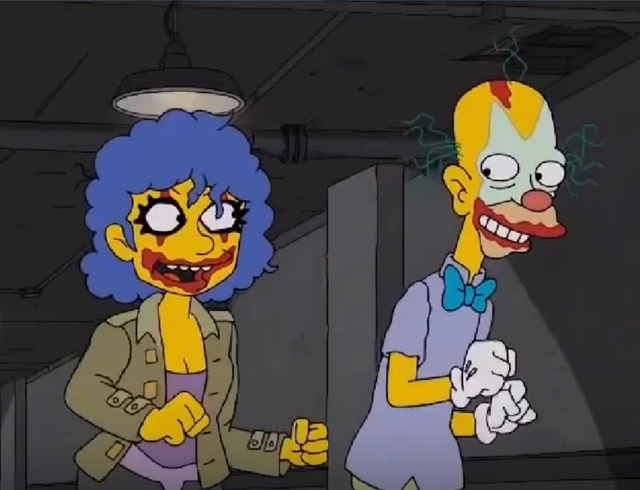
For decades, Neil Gaiman was one of the world’s most famous authors, in a world where famous authors are a rarity. His signature comic book series The Sandman is considered one of the most important and influential comics ever published, his novels have been massive best-sellers, and multiple movies and TV series have been made based on his work. His iconic leather jacket and black messy hair made instantly recognizable to anyone who’s been to a fan convention. He was a guest star on The Simpsons not once but twice. He was, at one point, a huge deal.
That feels like a distant memory now, highlighted by the release of Prime Video’s Good Omens Season 3, which could be the last TV project to ever be released with Gaiman’s name on it. The show, based on the 1990 novel by Gaiman and Terry Pratchett, premiered in 2019; a second season, released in 2023, continued the tale of Heaven and Hell messing with the slightly daffy residents of Earth, with more focus on the complicated bond between awkward angel Aziraphale (Michael Sheen) and not-so-demonic demon Crawley (David Tennant).
Seasons 1 and 2 were both six episodes long. The supposed “Season 3,” meanwhile, is really a 99-minute-long single episode, which essentially speed-runs through a season’s worth of material to wrap up the story. There’s a reason for this — Prime Video originally greenlit the third season of Good Omens in December 2023. However, in July 2024, Gaiman was accused of sexual assault and abuse by two women, and in April 2025 New York magazine ran a deep dive into those allegations and many others. Because of the allegations, Good Omens Season 3 was cut short and Gaiman stepped away from its production, while other Gaiman projects were quietly and quickly concluded or shelved. Unlike some people who have weathered such accusations, cancellation is the appropriate word to use here.
Gaiman’s first experience with TV came with the 1996 original miniseries Neverwhere, which ended up being more successful when he adapted it as a novel. In the 2010s, though, Gaiman became more active as a TV writer, contributing two original scripts to Seasons 6 and 7 of Doctor Who and also serving as a producer on American Gods. The Starz adaptation of the best-selling novel was plagued by behind-the-scenes drama involving constantly departing showrunners, but featured flashes of creative brilliance during its run.
And American Gods was just the start of Gaiman’s expanding TV empire: Beyond Good Omens, the long-thought-impossible-to-adapt The Sandman premiered on Netflix in 2022, doing a capable job of capturing the story’s magic. In April 2024, Netflix also launched the first season of Dead Boy Detectives, a show based on characters created by Gaiman and set within the same universe as The Sandman (with a little bit of cast crossover to boot). A Prime Video adaptation of Anansi Boys also wrapped production in 2022.
The 2024 allegations had a cascading effect on all those projects. Dead Boy Detectives was canceled in August 2024 after one season. The Sandman wrapped things up with Season 2 (despite there being plenty more material left in the original comics). And as for that one remaining unreleased project, Anasai Boys star Delroy Lindo told EW in 2025 that “I don’t think that’ll ever see the light of day. It’s too bad on many levels, but I was really excited to do it.”
Lindo did express optimism for the show one day getting unshelved: “Maybe it’ll be released. This is another reason to knock on wood.” It’s natural for Lindo to want to see a project he worked hard on not fester on a shelf. It’s also worth noting that Anasai Boys featured a largely Black cast, and there’s something uncomfortable about it being shelved while the final installments of Good Omens and The Sandman, led by white actors, did manage to make it to our screens.
It’s all part of the same uncomfortable calculus we’ve been stuck doing since 2017, as the worst qualities of one-time favorites have been exposed, leaving those who believe the victims scrambling for the most correct answer to these ethically murky (at best) situations. For many, Gaiman was a pop culture god on the level of Joss Whedon or Woody Allen. His fall from grace happened later than theirs, but the impact has been similar for fans, left to grapple with how they feel about their beloved favorites in the wake of knowing very unpleasant things about them.
Beyond being a fan of his work, I’ve interviewed Gaiman four times over the course of my career, including two occasions in person. I wish I could tell you that when I was sitting opposite him, I had some sort of sneaky feeling that he was capable of great harm, but I can’t. He had a bit of an ego about him, but it was easy to accept that as a natural consequence of being literally one of the most famous writers of his generation. Otherwise, the mask never slipped.
Creators like Dan Harmon have come back from rough tales of their behavior with thorough apologies, but Gaiman has firmly denied that there’s any truth to the multiple accounts of abuse, leaving these reports to fester in the imagination rather than heal. It’s a lack of self-awareness that’s disappointing to witness, though it’s far from the only disappointment now associated with Gaiman’s legacy. The real disappointment comes from knowing that an author so many believed to be capable of deep empathy was allegedly capable of empathy’s exact opposite.
When Good Omens Season 2 premiered, I wrote an impassioned plea for a third season, based entirely on my desire to see a resolution to the dramatic cliffhanger ending. The news that it would return to conclude the story was a relief; I remember thinking how excited I would be, to one day hit play on Aziraphale and Crawley’s final chapter. Actually getting to do so this week featured none of the joy I anticipated, because every swiftly resolved plot development reminded me why I was watching a truncated version of Season 3. It was impossible to separate art from artist, even as the show built up to a (spoilers) very happy ending.
Happy on paper, at least. There’s no happiness to be found in the erosion of Gaiman’s career. The most positive emotion that comes now is relief, that as much as his fantasy tales might have once entertained us, they’re in the process of fading away from the public consciousness. Maybe there’s one lesson to take from Good Omens, which ultimately concludes with Aziraphale and Crawley coming up with a new plan for the universe: No Heaven, no Hell, no celestial forces preventing humans from living their own lives. In short, a world without gods.
The rise of nerd culture in the mainstream was made possible in part by deifying creators. But gods complicate things. Maybe it’s best to let them fade away. Neil Gaiman included.









 English (US) ·