
 2 weeks ago
9
2 weeks ago
9
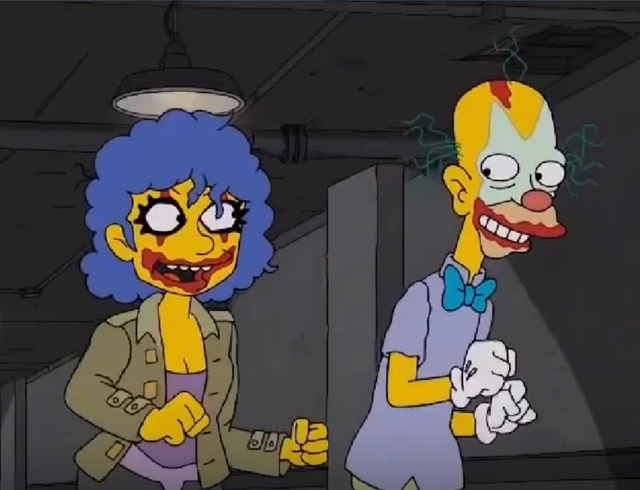
In the movie Obsession, a young man makes a wish, and everything goes horribly wrong as a result. It’s a classic premise — so classic that Jordan Peele named his production company after it — and writer/director Curry Barker is quite open about his direct inspiration: The second installment of The Simpsons’s Treehouse of Horror series, in which “Bart gets a monkey paw and causes a bunch of chaos,” as he explained in a September 2025 interview with Variety.
“We’ve seen ‘Be careful what you wish for’ tons of times. But we’ve never seen my version of it,” Barker continued. At 26, he isn’t old enough to have seen “Treehouse of Horror II” when it first aired in 1991; he instead brings a young man’s confidence to Obsession, a certainty that “my version” of the idea is still worth exploring. Which, thanks to some sharp execution on a microbudget level ($1 million!), does prove to be the case.
The box office reflects this, as Obsession has earned over $90 million in theaters since its release on May 15th. Most impressively, it made more in its second weekend of release than it did in its first — proof that word of mouth remains a powerful force for movie-goers, even if that word of mouth now comes in the form of TikTok clips.
[Editor’s note: The following contains mild spoilers for Obsession.]
Obsession begins, as mentioned, when twenty-something music shop employee Bear (Michael Johnston) flounders in his attempts to tell Nikki (Inde Navarrette) that he’s loved her since grade school. It definitely doesn’t seem like she thinks of him as more than a friend (a fact confirmed later in the film), and in a fit of frustration and despair he breaks open the novelty gift he’d gotten her: a “One Wish Willow” that promises to grant one wish to the user — just one.
Given that the One Wish Willow (shoutout to Barker for creating an instantly iconic horror icon, by the way) was $7.99 at a shop that also sells crystals and incense, a normal person would fairly assume that its magic isn’t real. However, Bear’s wish — that Nikki would love him “more than anyone in the fucking world” — starts to come true right away. From the beginning, though, it’s clear that there is something wrong with Nikki now, that she’s not behaving like herself. Barker and cinematographer Taylor Clemons make some smart choices in terms of the way they light Nikki while she’s under control of the wish, with frequent shots that reduce her to a dark silhouette, an outline of a person who is not fully there anymore.

Obsession (Focus Features)
The film eventually comes to treat what’s happened to Nikki as a form of possession, enhanced by the occasional instance when her true self manages to rise to the surface, often leading to extreme violence. It’s a story that demands a huge range from its lead actress, and Navarrette’s performance is a marvel in this regard. She delineates all the different Nikkis she’s asked to play so clearly, with a remarkable command over her physicality that leads to some of the movie’s most effectively creepy scares.
Despite seeing what he’s done to the girl he claims to love, though, it’s not so easy to reject the possibility of sympathy for Bear. It helps that while he made one very bad decision, he didn’t know how dangerous a situation he was about to create when he snapped the One Wish Willow. Even though he’s the architect of not just his own downfall, but his friends, at the beginning he was just making a silly wish, one that happened to send him down this dark path.
There’s something profoundly modern about the way in which Bear feels genuinely hopeless, because this world offers him no support, no guidance. He can’t go to the police — what would he say to them? He tries to take Nikki to a doctor after an incident of self-harm, but while the sequence is vague (shout out to the Redditors who were also confused), it appears she refuses treatment. Even the customer support line from the One Wish Willow box leads to an employee so devoid of sympathy that he might as well have been AI. All that the voice on the other end of the phone (played by Barker himself) can offer is confirmation that there are two ways for Bear’s wish to end: He dies or she does. It all speaks to a problem bigger than “the male loneliness epidemic” — a society where young people feel trapped by the future’s limitations, rather than excited by its possibilities.

Obsession (Focus Features)
Of course, any serious sympathy for Bear gets drowned out by two key moments in the movie, the most memorable of which is him admitting at dinner with Nikki that “it doesn’t matter to me,” that she’s only with him because of the wish. Later, when the “real” Nikki begs him for death, he chafes at the idea that she’s being tortured by the spell she’s under. “Is it so bad being with me?” he asks her. The words of a person who’s never had his choices, his agency, his future taken away from him.
If Bear had made different decisions in those moments, shown true awareness and regret for what he’d done, would this story have ended with a lot less bloodshed? Perhaps. His willful ignorance of his actions certainly didn’t make the situation any better, that’s for sure. It’s hard to call Obsession a cautionary tale, beyond the reminder that $7.99 worth of magic is just enough for the magic to work, but not enough for it to work well — a real “you get what you pay for” situation. It’s instead best enjoyed as a reminder that even the oldest idea can still inspire something fresh and relevant for a new generation.
Obsession is in theaters now.









 English (US) ·