
 1 month ago
25
1 month ago
25
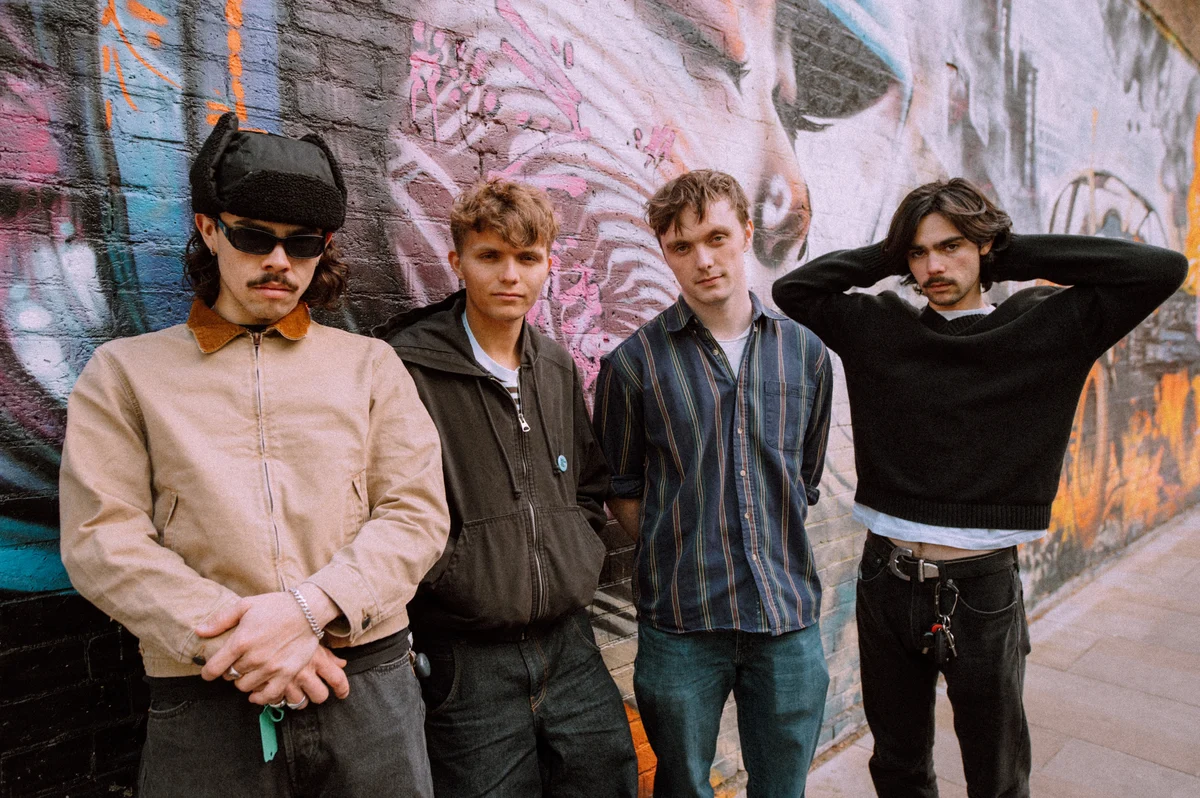

The opening scene of the Little Grandad biopic fades up on an open mic night in East London. There are only four people in the room: Harry Lower, Jack Lower, Ned Ashcroft, and James Brennan.
Okay, five people – there’s a drunk guy slurring and stammering at the bar, doing his darndest to drown out whoever’s singing on stage. “It was the last week of that open mic; they don’t even run it anymore,” Harry says of the event at Haggerston Signature Brew. “We killed it,” Ned shrugs.
Perhaps the open mic’s organiser made some kind of deal-with-the-devil sacrifice, though, because so much has happened for Little Grandad since that fateful evening on which its four members properly met for the first time.
Sign up to Best Fit's Substack for regular dispatches from the world of pop culture
They’ve opened for bands like The Hold Steady, Mt Joy, and Cardinals, and been booked for every festival ever. They did a 6 Music live session with Steve Lamacq. Tim Perry, booker for Brixton’s legendary Windmill, crowned them as the venue’s unofficial house band of 2025, even though Harry wonders if “we’re a bit too poppy to be a Windmill band.” People started showing up to their gigs knowing the words, even before they had music out. “I was laughing on stage. I couldn’t believe they were there. It was surreal,” Ned says.
Harry recently told all of this to their cupid matchmaker, the retired organiser of the open mic. “I actually met the guy the other day in a coffee shop. I went up and spoke to him and told him about the band and what was going on. He looked at me kind of a bit disgusted, like, there’s no way. Very nice bloke though,” he says, admitting that the man’s indignance is a fair enough reaction given the full-of-beans messiness of their early shows.

The four guys sort of crossed paths here and there before duetting with Drunk Bar Patron #1. Jack Lower – Little Grandad bassist and Harry’s older brother – used to be the tour manager for another exciting London group, Mary in the Junkyard. That band shared a flat with Ned. Ned and Jack might have exchanged the occasional bleary head nod at 4 am when Jack came to pick up Mary et al for tour.
Then there was the infamous Project X-rivalling house party, which involved not one but five houses. “Each one was like a different festival stage,” Jack says. “There was a dnb house, a jazz house.” All the Little Grandad members were in attendance, but not yet pals. People still come up to Ned – people he doesn’t know – and say they had a wild time jamming in his bedroom that night. And yes, if you’re wondering, the next day’s clean-up took an abhorrently long time.
After the open mic night, Ned and Jack started going to gigs together – Real Farmer, Deftones, The Backseat Lovers – slightly more interested in being patrons than performers. Meanwhile, Harry tinkered away with the central frames of what would become Little Grandad’s first songs. He’d shape together a GarageBand demo and slide it across to his brother, and then to Ned (who’s on guitar and sometimes trumpet), and James Brennan (who’s on drums and sometimes guitar). Everyone sings, their harmonies approaching Pet Sounds-level wonderful, though Jack and Harry trade lead vocals.
“Almost every song we’ve done has been on such a journey and changed a lot from what it was the first time we played it to now,” Harry explains of the process. “For me, it needs to make sense for it to be a journey. I don’t like doing that thing where some people write two songs and stick them together. It’s important to me for it to be one thing.”
He’s not a dictatorial bandleader in the Billy Corgan or Stephen Malkmus mold – two names that come up a few times during our chat – and he certainly doesn’t write parts for his bandmates as those 90s icons did. “I don’t really hear that much,” he says, meaning the others’ parts aren’t set in stone at the demo stage, but the sentiment’s ambiguity cues some lols.
“That’s the quote,” Jack laughs: “I don’t really hear that much.”
It’s this figure-it-out-in-a-room approach that leads to moments like the outro – the third act, Jack calls it – of “Unmasked”. That song is half of the double-A-side single the band released last week.
“A robot could never make ‘Unmasked’,” Jack says of the track, which begins with a cautious conveyor of sticky barre chords under Ned’s trumpet fanfare, and culminates with the same instrument blaring dissonantly into a guitar pickup as Harry bellows his guts out into the mic. Between the poles are gunshot snare rolls, dig-deep harmonies, and winding, snaking guitar scales. “It’s just too bonkers. It breaks a lot of rules. None of your songs” – he addresses Harry – “they are catchy melodically, but they don’t spin back round to choruses.”
“Everything else is pretty cowboy chords,” Harry replies. “I want people to be able to play them.”
That makes sense given he and his bandmates are relative newcomers to playing music, with the exception of Ned. Harry picked up guitar at 18; James was a similar age when he started. Jack has only been playing bass a year, a pink Squier forced into his hands by Ned after one not-so-great band practice. (“I snapped at the end of rehearsal and said, ‘mate, you’ve gotta learn bass,’” Ned remembers.)
“There’s no better way to do it than play 76 gigs since August,” Jack says of the learning curve.
“Jack’s played bass more while gigging than he has rehearsing and practicing,” Harry points out.
“Most people sit in their room and practice; I don’t think I’ve ever done that,” his brother answers. “If you ask me to play any other song [that isn’t Little Grandad], I couldn’t.”


This results in some beneficial naivety. Little Grandad’s songs simmer and explode, wind up carefully and then freewheel, switch gears and tempos and never worry about conventional structure or harmony so much as make-it-up-as-we-go spontaneity and trial-and-error journeying. There’s never any copy-and-paste choruses either. “Everyone’s moving back to real stuff and stuff that’s quite anti-structure,” Jack muses of a wider music consumption trend. They weren’t aiming to target that shift, but it’s working in their favour.
Nor were they aiming to froth up hype by withholding recorded music for so long. That, too, has worked to their advantage. Jack calls it a happy accident. Actually, they’ve actually been thinking carefully about getting each song in the bag – and then releasing it – at the perfect moment. Not when it’s unfinished, nor once it’s gone too far the other way, laboured over. “Being a very new band, that’s quite a stressful thing,” Harry shares. “Trying to get down something, capture it at the right moment. How long are people gonna wait for you before they just stop waiting?”
“We just knew that when we started gigging, it’s not that records don’t interest us, but the live thing is so much more giving. And we just wanted to be a good live band,” Jack says, and James agrees: “We just wanted to figure it out as well – how to be a band. We were never gonna learn that by just recording stuff straight away.”

“Sleepwalking” is the other song that arrived last week. The two singles occupy the extremes of the band’s spectrum, “Sleepwalking” a mellower, Big Star-leaning cut guided by jangly acoustics and a rise-and-fall melody that feels like a tickle behind the ear. The band hopes this one-two delivery prevents people from putting them in a box – because the music they like to listen to is fairly unboxable. Yeah, there’s loose-lipped American idols like David Berman and Stephen Malkmus. But LG are just as enthusiastic about the Rat Pack (they weigh the merits of Sinatra vs Martin), and Chet Baker, and guitar riffs you can hum. Jack and Harry demonstrate by trading football-chant renditions of “Reptilia”, “No One Knows”, and something by Arctic Monkeys. They also love Deftones, Neil Young, and The Growlers – so go figure.
This band has chemistry, but each member also has his distinct MO: Harry strikes you as the diffident musical leader and visionary, while his brother, with his tour-managing experience, has the kind of confidence and industry acumen necessary to bring artistic genius out of its incubation: more of a day-to-day leader. Ned, the most musically trained, and James, the dependable, tireless backline, interject with quiet wisdom and good ideas, much like their instruments and voices do in the music.
Dropping some cliche here about how ‘this is just the beginning’ for Little Grandad would do them a disservice, as their gig count, plaudits, and bright, unique songwriting confirm. Ned is talking in this next quote about the importance of releasing the right music at the right time, but his point parallels the idea of the band moving forward with an equal balance of serendipity and intention (and really fucking great songs). “You’re trying to make the world that we built make sense, and also give it a bit of solidity and security, and make it into something that exists in the world,” he says. “It’s nice to have a record out that does that.” It sure is.




 English (US) ·