
 1 month ago
13
1 month ago
13


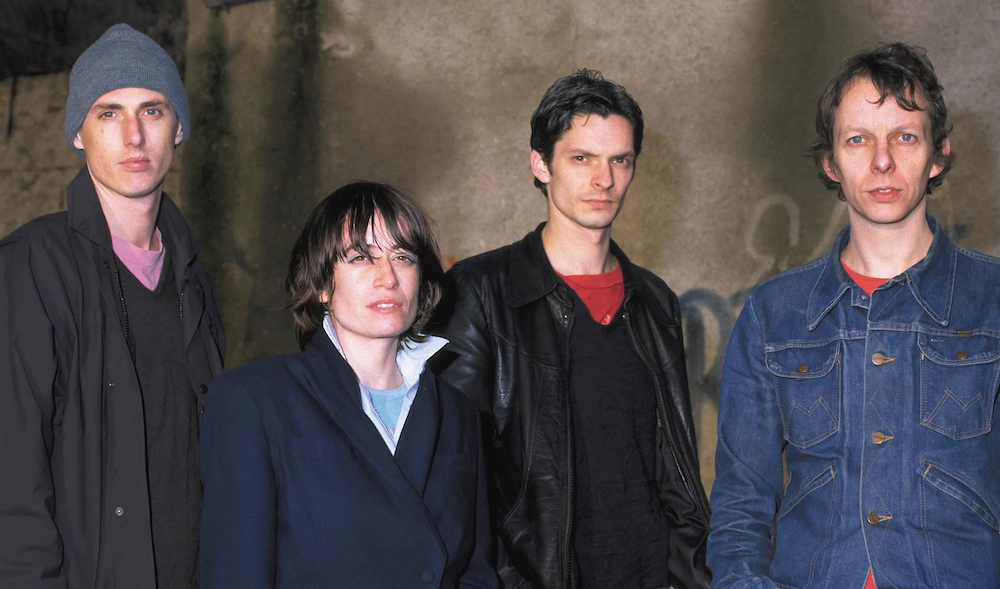
Lead photos of Monokate by Shali Blok
The line between here and there is thinner than you think.
These words appear onscreen during the opening ceremony of Eurosonic Noorderslag. It’s during a performance by Alina Pash, an artist from Ukraine.
Set in the cosy, cobbledy university town of Groningen – ‘the capital of the north’ – ESNS is Europe’s largest coming-together of industry titans and ahead-of-the-curve acts. It platformed Fontaines D.C., Wet Leg, Arlo Parks, IDLES, and Dua Lipa before those artists shot into the stratosphere, and awarded each of them the newcomer of the year award. For the festival’s 2026 edition, there are 40,000 attendees and 300+ artists from 39 countries.
It’s a shame they couldn’t get one more. After all, Eurosonic celebrates its 40th birthday this year – half a lifetime. The theme landed on for the big 4-0 is ‘Europe Calling’. It’s a call not to the rest of the world, but to neighbouring nations – a siren that urges us to link arms and face together the existential threats posed to the music industry, to life as we know it.
Obviously we are living through a dark era quickly turning darker. Surging support for extreme-right populists across the continent is detrimental to the music industry: for independent venues, freedom of speech, arts funding, and the ability to travel unmolested across borders. A bloc of European countries may ‘technically’ be at war with the United States if Trump follows through on threats to annex Greenland – a territory to which Denmark already gives the US unprecedented access. This only emboldens Putin’s Russia and weakens European opposition to the full-scale invasion of Ukraine.
To keep Europe whole, to keep Europe united, it all starts with Ukraine.

The Ukrainian representation this year is impressive. There aren’t as many acts as there are from, say, Ireland – more on Ireland later – but all are astoundingly impactful. When Monokate opens her set, her home of Kyiv has been without power for 24 hours. Russia has been targeting power plants and electricity lifelines with increased tenacity. Backed by a band from Belgium – Slow Pilot – Monokate’s earthquaking gothic rock is a temporary purge of anxiety or grief. It sounds like standing on a shoreline looking out at black, forbidding waves as they undulate uncontrollably.
Across town in a warehouse space, Hyphen Dash takes the stage. Their music sounds like piano-jazz legends such as Vince Guaraldi and Dave Brubeck if they had some schooling in art-punk and hip-hop. The harmonic element – provided by Polina Maiboroda’s shapeshifting electric piano colluding with Yevhen Puhachov’s bass – is mellow, open, and sweep-you-up. Underneath are choppy, syncopated grooves – they drop into a shuffle mode one minute and then crash towards something more broken and urgent the next. “We came from the brave country of Ukraine,” drummer Myshko Birchenko tells us. “It is very hard to be here, but we have to do this to spread awareness about what is going on in our country.”
It’s hard for many reasons: I speak to Myshko later. A retro video camera swinging around his neck and donning an orange beanie hat, he tells me about his mixed feelings towards being here: it’s safe, there’s electricity, and all he has to do is play music. ‘Cosy’ is the word he uses to describe the main hub of Eurosonic, De Oosterpoort cultural centre. But the band has found ways to balance their relative – and I do stress relative – privilege and comfort against efforts to help their home country in meaningful ways.
Hyphen Dash’s album from last year, Basement 626, was recorded 15km from the frontline, in a basement that was pounded by artillery the entire time. It was a display of defiance, bravery, and solidarity on the band’s part. It was also a source of inspiration: they didn’t write anything before going into the basement studio – they let this fraught, heightened state of being lead them to whatever music was the natural product of such extraordinary conditions. All Bandcamp proceeds go to helping Ukraine’s resistance, and you can buy it here.

“Thank you all for supporting our country,” Myshko says at the end of their set. It prompts a question: well, are we supporting their country, when all we’re doing is showing up, having a drink, and taking in their experimental cool-jazz sounds?
Yes, says Alona Dmukhovska. She co-founded Music Export Ukraine, an independent organisation that helps Ukrainian artists build international careers, having shepherded acts to festivals in over 20 countries.
“We had this ethical question in 2022-2023 of whether we need concerts when we have a war,” she tells me. “Because why are people having fun, and how ethical is it? But we came to the conclusion that it’s super ethical in order to keep the economy going – to support the teams working for technical production, for the bar, for promotion companies, marketing.”
Alona goes on to explain that every single event in Ukraine now has a charity component. This isn’t a top-down mandated rule, it’s something that everyone in the industry has unanimously agreed they will adhere to. “So this saying that music can save the world, actually it can,” she says.

By supporting Ukrainian music, “you can support humanitarian needs,” Alona continues. “I hope we are trendsetters in this sense. We can tell this example to our colleagues abroad – that everybody could give 10% of their efforts, time, and planning towards something good. It will help to reach a bigger goal. Rather than neglecting the world we are living in, it is an investment into the future. We are all overworked, underpaid, and it seems there’s no easy solution. I give 10% of my time for free, to help somebody, or 10% of my budget to support grassroots venues or artists I care about. I don’t think of that as a tax – I see it as an investment of my time and money into the future that I would like to have.”
Eurosonic is central to this work. Last year, Ukraine’s DONBASGRL played Eurosonic and because of that, Alona tells me, she got invited to play Glastonbury. “Usually it takes years and years to develop the act and have this type of opportunity, but through showcase events like Eurosonic there is a shortcut. It’s very inspiring and it keeps on motivating us to do our best, and [encourages] artists to keep on going.”
Alona also stresses that even though many artists would love to make it in the UK and US, it’s not the only route to a sustainable career – “sometimes you can be a regional sensation.” Indeed, even in a time of literal war, festivals of all sizes in Ukraine are managing to persevere. That’s what Tanya Stadnyk explains during her panel on how to tell one’s story as an artist. To share their insight, she’s invited speakers from the Eastern European Music Academy, a project that connects nations in the region with various opportunities – stronger together. Tanya is one of Alona’s colleagues and director of operations at Music Export Ukraine. She explains that, in 2023, live events numbers in Ukraine actually bounced back to pre-Covid levels, so despite the full-scale invasion and so much population displacement, there is a growing demand for Ukrainian culture.

A heartbreaking underside of this is that music scenes in occupied areas of the country are being eroded as their artists are forced to relocate. One of the panelists, Kseniia Yanus, has been documenting a “dark-folk and noise-industrial” scene in south Ukraine, for example, which has largely gone extinct. She felt it was important to archive this for international readers in particular, to prevent it from being lost to history. She also runs a Kyiv-based concert series called Noise Every Wednesday.
This all provokes a wider issue in the music industry that Eurosonic addresses: “The middle is giving in.” That’s how Isleifur Thorhallsson from Iceland Airwaves festival puts it. And it’s not just the case for countries bravely resisting a full-scale invasion. That space between DIY house shows and six nights at Wembley Stadium is crumbling everywhere – including in the UK. It’s a space that Eurosonic is fighting for, as are its many host venues. Vera, for instance, is one of the most legendary volunteer-run clubs in Europe. Nirvana played one of their first shows on the continent here, in 1989, and Vera has a bespoke poster designed for every gig. For those in the know, the word Vera is practically synonymous with keeping it real – with lifelong support for independent live music.
At an individual level, we can carry out small acts of activism and sacrifice to pursue a democratic, decentralized, antifascist, artist-first industry. Like Silvurdrongur does. The Faroese artist performs bewildering, artful noise-rap while dressed like a babushka and paces the room to intimidate – or, I’d argue – involve the audience. He tells me that when Spotify CEO Daniel Ek made investments into the arms industry, he pulled his music from the platform and is now exclusively selling on Bandcamp. “I don’t want the minuscule amount of money that’s supposed to go to me – and isn’t going to me anyway – to go to fucking weapons,” he says. “That was the last straw. There were a lot of reasons to do it earlier.”

Silvurdrongur also describes an overwhelming feeling of ‘nowstalgia’ in day-to-day life, heightened at an event like Eurosonic. He defines it as “being grateful that things are still here, everything is still working, and young people aren’t being sent away to fight against other young people. Everything’s okay. I find myself really savouring that. But of course built into that is also the recognition that it’s probably not always going to be like this.”
It’s true, although Eurosonic makes everything feel robust, strangely perfect. If only for three-four days. Across the entire weekend, there is not a single artist cancellation – a rarity at any festival, let alone one where artists are travelling from 39 different countries. Eurosonic’s original mission, 40 years ago, was to celebrate Dutch pop, but it has transitioned into something like the heart of the European music industry – mainland Europe’s answer to The Great Escape or SXSW, as it takes over more than 30 of the city’s venues and hosts 520 industry speakers during its conference programme.
Besides Ukraine, there’s an outsized impact from the Irish contingent this year. The queue for Florence Road starts snaking around the block more than an hour before the rising altrock quartet’s set time. Buzzy, Buckley-esque newcomer Dove Ellis gives everyone goosebumps – everyone who can get in the room, that is. There’s also Madra Salach, Officer John, and Child of Prague. The latter performs their mutated vision of Irish traditional folk, filtering lost-to-time standards through midwest emo chord clumps and droning post-rock influences. It shouldn’t work but really, really does.
But there is an endless list of new favourites from all countries to be discovered. Yana Couto, from Poland, puts a sheet over her piano’s pinblock, softening the attack so that it sounds like “being hugged by something warm, and I hope you will feel that warmth,” she says. And we do: a collective shush cuts through the room when someone in the crowd dares to talk. Couto uses field recordings of birds duetting with wind chimes and waves falling on the shore while synths emulate the spongy pulsations of some magical orb.

Brussels-based Adja has the most spellbinding voice of the whole festival, dive-bombing into notes and jumping in and out of this sharp, pointed vocal delivery over a smooth, jazzy backline. “What is real these days isn’t what you see or feel about it, baby,” she trills, one of several wry jabs at the absurdity of our reject-the-evidence-of-your-eyes-and-ears era. Adding this sassy, throwaway “baby” on the end subverts the seriousness of it all.
Taking care of the indie rock and shoegaze fans, Roomer’s spectral, greyscale, detuned guitar conversations split the difference between Duster and Sonic Youth. And there are also Snuggle’s bedtime murmurs and watery tones, recalling acts like Men I Trust or Jay Som. The most wake-you-up act of the fest is Ghent’s Maria Iskariot. Her disorientating, insistent thrill-punk prompts her to fly around the stage of Groningen’s notoriously grungy Mutua Fides venue (which doesn’t have a toilet – indeed, “look for the toilet in Mutua Fides” is on the Eurosonic bingo card).
Though they sound nothing like Maria Iskariot, Iceland’s Inspector Spacetime are similarly committed to inexhaustible, high-energy fun. Their delirious, hyper club beats have a surprisingly punk-rock vocal element. Wearing a 365 Partygirl t-shirt, Elías Geir Óskarsson has the swaggering aggression of Ian Shelton from Militarie Gun in contrast to the band’s brat fandom. His bandmates sweatily pogo around the stage in white shirts and black ties as they sing about how great dancing is, approximating the vibe of an office party gone wrong (or right). It’s a euphoric, giddy highlight of the final night.

Despite the profound and existential themes underpinning Eurosonic this year, the atmosphere never feels intense or sombre. It feels safe, communal, united, and powerful – and it is more powerful than we realise. Vlad Yaremchuk from Music Saves Ukraine says that music is “a bridge to people’s hearts that no politician will ever have.”
And so my takeaway is this: seek out music beyond your borders, beyond your algorithm, and support oppressed or less privileged nations by championing their culture. Realise the knock-on effect that an individual’s small, manageable acts can have. It’s significant: Alona Dmukhovska outlined the economic positives of continuing to support Ukrainian music despite more pressing priorities. And there’s also the morale-lift factor that comes from a band like Hyphen Dash or Monokate getting to exist and perform for military personnel or Ukrainian civilians whose homes are being destroyed.
The line between here and there is thinner than you think…

But what can I do? It’s the system’s fault! You could divest from services that fund AI weaponry, even if you have to remake some playlists. You could support an artist and/or a charitable cause directly by buying an album on Bandcamp. You could shout about or go see an artist from a less advantaged nation rather than going with the flow of whatever’s hottest in your neck of the woods (why come to a festival with acts from thirty-nine countries and queue for an hour to see a band that’ll come through your hometown every few months?!). The least you can do is not talk to your mate in the crowd as someone from Ukraine – or anyone, really – is sharing their story and their art.
Music can feel like a frivolity, a nice-to-have, as we try to comprehend how rapidly and terrifyingly the world is being reshaped, how thin the line is between here and there. But music is hope, connection, unity. It’s cultural documentation, posterity, and a way of laying the foundations for a future that makes more sense, however distant. It’s defiance and courage. It’s everything.
After Monokate tells us during her set about the ongoing blackout in Kyiv, she says that Ukraine is a cold, dark place at this time of year. “But I like darkness,” she pauses. “It inspires me.” Maybe Eurosonic is for those that believe it is darkest before the dawn – but it’s also for those that know we must continue through the endless night, make it ours, and then create our own sources of light.
Find out more about Eurosonic Nooderlsag at esns.nl











 English (US) ·