
 4 weeks ago
27
4 weeks ago
27
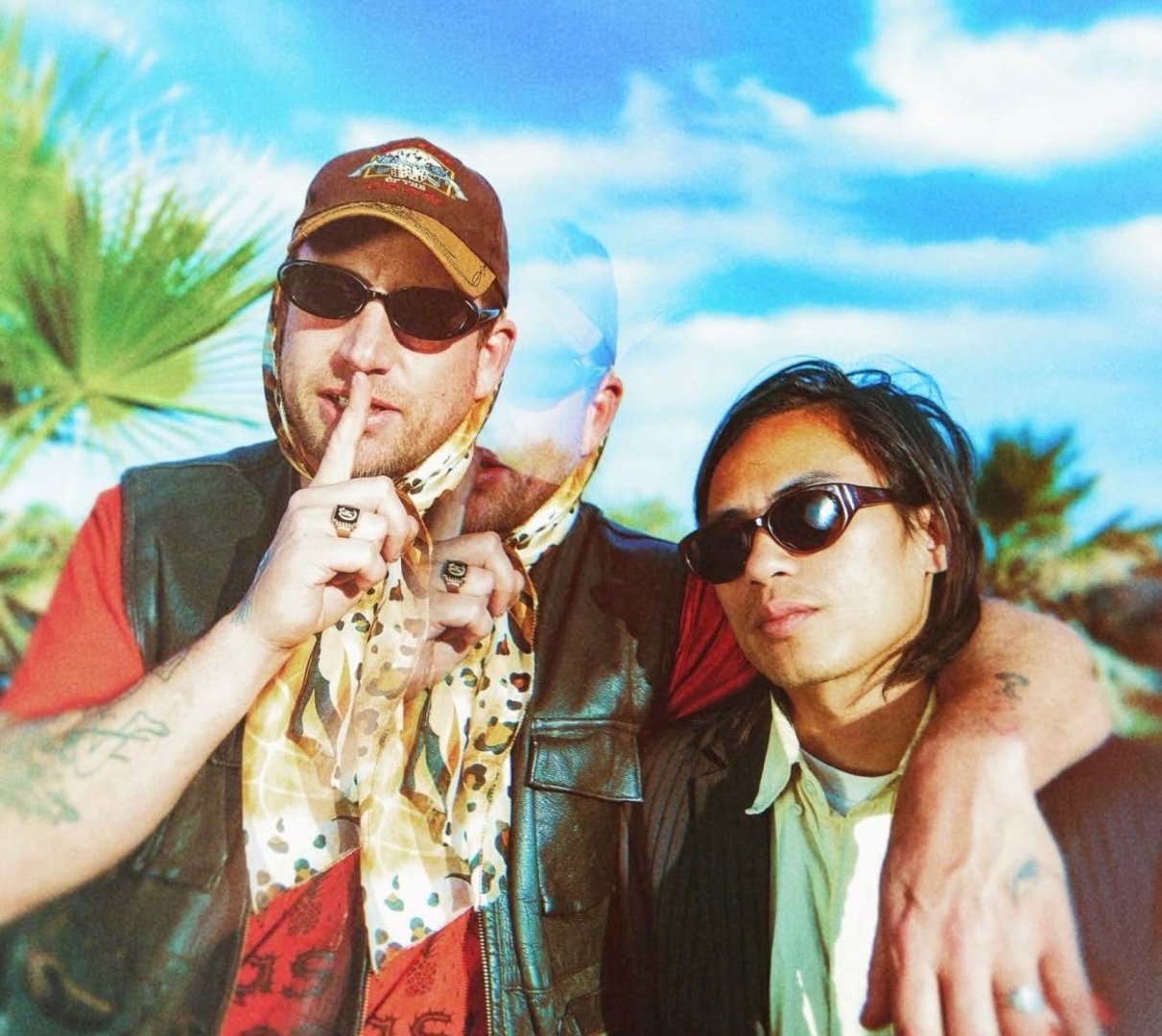
Rising artist BrokinPaper reflects on his musical journey, creative independence, and the process of carving out space as an AAPI artist in today’s music landscape.
New York has long served as a proving ground for artists building their careers independently, grinding through long hours and constantly reinventing themselves to refine their craft. Rising artist BrokinPaper embodies that spirit. Born and raised in Queens, the New York City native, whose real name is Harrison Lee, first launched his music career in 2009. His sound fuses hip hop influences with gritty, dark techno textures, drawing natural comparisons to Gesaffelstein, Boys Noize, and Nine Inch Nails.
Throughout his journey, BrokinPaper operates entirely on his own terms. His releases have steadily earned the attention of industry heavyweights, including REZZ and Timbaland. Beyond the dancefloor, his work sits at the intersection of music, fashion, and art, with a distinct aesthetic vision that has resonated across luxury fashion and contemporary art spaces. He has performed at high-profile events, including the Berlin Gallery Weekend and the exclusive Gucci Cruise afterparty, while his music has also been featured in global fashion campaigns for ZARA.
Now, BrokinPaper is gearing up for a major year ahead. He has recently released his latest track, “Damage,” the first single from his forthcoming album FUNCTION OVER FORM, due this September. Built on industrial textures and dark, cinematic loops, the track draws on UK bass and garage influences, showcasing a precise understanding of intricate sound design that moves the dancefloor.
We caught up with BrokinPaper to discuss his musical journey, his perspective on navigating the creative space as an AAPI artist, and what lies ahead. Alongside the conversation, he also put together an exclusive mix. Read on for the full interview and catch BrokinPaper live at Trans-Pecos in New York City on May 29.
Stream EDMID Guest Mix 498 || BrokinPaper on SoundCloud:
Thank you so much for taking the time to chat with us today. To start from the beginning, you’re a New York City native, and the city feels deeply embedded in your music. How did you first get into electronic music, and were there particular scenes, venues, or cultural influences in New York that shaped your sound?
I started producing on FL Studio in high school, making rap beats at first. Around that time, there were a lot of artists connected to New York carving out really distinct sounds—Clams Casino with A$AP Rocky, Baauer out of Brooklyn—so even indirectly, that energy was everywhere. I was drawn to that overlap between hip-hop and electronic music, but I didn’t want to just produce for other artists. I wanted to build something that felt like its own world.
As I experimented across genres, I started leaning more into darker, more minimal electronic sounds, especially after getting into Gesaffelstein. That shift really came together with The Maslow EP in 2019—that’s when the “BrokinPaper” sound started to take shape.
The BrokinPaper project feels very cinematic and world-driven. How did that creative alias come about, and what does the name represent to you?
The name “BrokinPaper” comes from a metal band I tried to start in high school. It was called “Broken Paper Wings” because we wanted to make emo music. When that didn’t fully pan out, I took “BrokinPaper” as a placeholder, expecting to change it later.
Over time, it stopped feeling like a placeholder and started feeling like an identity. I started to value how abstract it is—it doesn’t point to a specific genre or expectation. That gives me the freedom to build different worlds with each project without the name boxing me in. I like that listeners come in without a fixed idea of what “BrokinPaper” is supposed to sound like—they can just experience each release on its own terms.
You’ve built momentum across music, fashion, and art worlds while remaining fully independent. How did those different creative spaces naturally start intersecting for you?
I feel like when I’m creating, everything kind of feeds into itself. I’ll finish a song, and it sparks a visual or a certain feeling, and then that carries into whatever comes next. I’ve always been drawn to that idea of art inspiring more art, and I try to keep that energy in everything I put out.
I also think of my music as inherently visual, even if there aren’t any visuals attached. I like the idea of someone hearing it and building their own world around it. Because of that, the crossover into fashion and other creative spaces wasn’t really intentional—it just kind of grew naturally out of the music. It’s been really special seeing other creatives—not just musicians—connect with it and interpret it in their own way.

Speaking on your latest release, “Damage” blends UK bass and garage influences with darker, industrial textures. You also mentioned the connection the song made with metal audiences, and that wasn’t intentional. Has that response made you more interested in exploring heavier sounds moving forward?
Yeah, definitely. I didn’t go into “Damage” trying to tap into that heavier space, but seeing that response has made me more open to pushing in that direction. Over the past year, I’ve been DJing a lot more, and that’s naturally shifted how I think about production. I’ve been making tracks that I actually want to play out, and “Damage” is a good example of that—it’s more direct, more physical, and just fun to drop in a set. That energy lines up really well with the upcoming project, FUNCTION OVER FORM. It’s a bit more stripped back and intentional, just getting straight to the point.
Now entering this next chapter with FUNCTION OVER FORM, how do you feel you’ve evolved from the artist who first started making music in New York? And sonically or creatively, how does this album differ from your previous work?
I think DJing more has really changed how I approach making music. When I first started, I was experimenting a lot more and trying to find my identity through different sounds. Now I feel a lot more intentional with what I’m making and why. With FUNCTION OVER FORM, the idea is pretty literal—I wanted each track to just work. No heavy narrative, no hidden meaning, just something direct that translates immediately, especially in a live setting. Or maybe that absence of meaning becomes the point in itself. Because of that, the sound leans darker, more industrial, and more club-focused than my earlier work. And then the next project, FORM OVER FUNCTION, flips that completely—it’s more melodic, more expressive, and lighter in tone.

The conversation around AAPI representation in music has evolved a lot in recent years. From your perspective, have you noticed shifts within the industry? Particularly in darker or more experimental electronic spaces that haven’t always felt visibly diverse?
I think there’s definitely been a shift in the past few years. You’re seeing more AAPI artists not just breaking through, but doing it on their own terms and shaping the sound of their scenes. Artists like ISOxo and Knock2 are obvious examples—they came up from more underground spaces and are now operating on a much bigger scale without losing that identity.
At the same time, in darker or more experimental electronic spaces, which have traditionally felt pretty Euro-centric, you’re starting to see more AAPI artists carve out space there too. Someone like Limbo Slice is a good example of that—bringing a different perspective into a scene that hasn’t always felt very diverse. It still feels early in a lot of ways, but it’s been really meaningful to see that shift happening in real time, especially across scenes that didn’t always feel as open before.
Lastly, beyond representation or genre, what do you ultimately hope people connect with most when they hear BrokinPaper’s music?
I hope that when people hear my music, it sparks something in them—whether that’s inspiration, motivation, or just the urge to create in their own way. I’ve always loved seeing how people interpret what I make, because even though I have my own meaning behind it, that’s only one version of it. Once it’s out, it kind of belongs to whoever’s listening. There’s something really special about someone taking that and turning it into their own idea or their own piece of work. That’s probably what means the most to me.
Follow BrokinPaper:
Website | X | Instagram | SoundCloud | YouTube | TikTok
The post Get to Know Rising AAPI Artist BrokinPaper appeared first on EDM Identity.






 English (US) ·