
 1 month ago
14
1 month ago
14


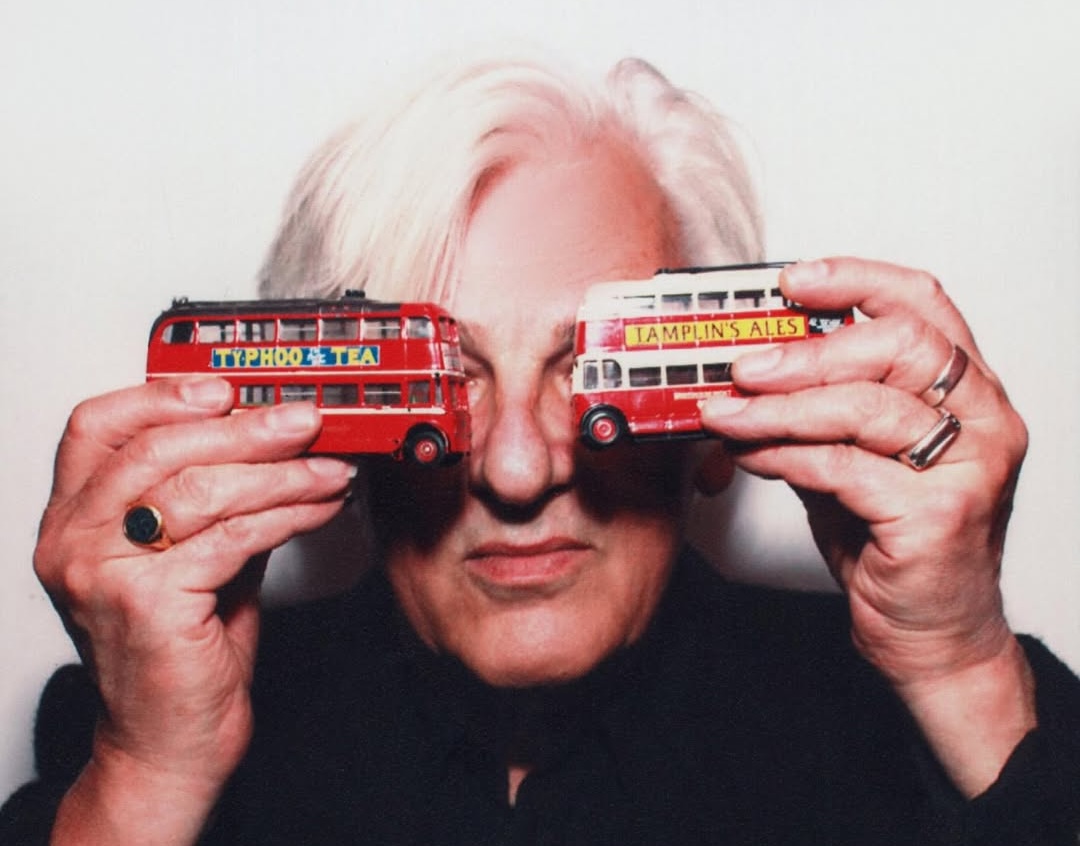
Original photography by Matthew Kadi
The first half of post-punk revivalists Home Front, lead vocalist Graeme McKinnon, developed his love for music after seeing a video of Dire Straits’ “Walk Of Life” in which Mark Knopfler wears a red headband.
So much so, McKinnon sported a similar red headband and OshKosh B’gosh overalls to school, “feeling cool as hell,” before being told he looked like an idiot, he tells me over a video call. He’s in an office, flanked by a black bookcase, chest of drawers and stacked speakers pushed against the wall behind him – a cheeky lava lamp next to the Stanton STX turntable on the chest – with a framed Bad Brains poster hanging on the white wall.
While the red headband may have been retired early on in McKinnon’s career, the adoration of sound did not cease to function; rather, it was invigorated as McKinnon’s older brother not only guided his taste from rock towards rap, but also punk, genres that later bloomed in the late ‘80s and ‘90s, both separately, and together. “My brother was three years older than me,” McKinnon explains, “and he started getting into punk around that time, showing me stuff. There was a compilation called Someone’s Going To Get Their Head Kicked In, and pretty much after hearing that, I think everything started opening up for me.”
Get the Best Fit take on the week in music direct to your inbox every Friday
Pouring in the door were genres that McKinnon didn’t know existed as he absorbed anything and everything in front of him. “I remember getting Reign In Blood when I was in grade five or six – and I went to a Catholic school – so I would listen to Reign In Blood at minus one [volume] in my bedroom,” he tells me, “staring at the speakers, convinced that it was bringing the devil into the house.”
The second half of Home Front, Clint Frazier, may as well have had his love for music intertwined with his DNA, despite the greater community around Frazier growing up not understanding it quite as much. “I grew up in a small town north of the city,” Frazier says, meaning Edmonton, Canada. “You know, far-right, hillbilly community, a town [with a] farming community, 1500 god-fearing, salt-of-the-earth human beings.” Frazier’s camera is off for the call, but he listens intently and chimes in with ease. “My dad actually was a total far-left hippie and had an absolutely incredible record collection,” he goes on. “He actually had a room in our house set up with his record player.”
It never really started for Frazier, his love of music, it just was. As he aged, he would sneak in the room with the turntable and play his dad’s records. “He would always know. He would say, ‘You fucked up my turntable’ and freak out at me.” With sound being an effervescent presence in his young life, Frazier’s own taste developed with the guidance of his cousins, who dove head-first into the punk scene in the mid-to-late-‘80s. They gifted him a Bad Religion shirt – “I wore that probably for eight months straight” – and brought him to hall shows in Edmonton.

It was in the late ‘90s when his and McKinnon’s paths first crossed. Frazier went to see McKinnon’s previous project, Wednesday Night Heroes, play a show, which “absolutely blew my mind,” Frazier recollects, “Kids were stage diving, and it was a hall full of freaks like me. I was like, ‘Oh man, you guys all get the shit kicked out of you on a regular basis? You guys get full cans of beer thrown at you?’”
McKinnon’s realisation wasn’t too far off Frazier’s, as the vocalist describes “seeing SNFU for the first time,” McKinnon’s hometown band, “and seeing people stage diving and flying into each other. I remember at that point, I was like, ‘Okay, everything I liked before doesn’t exist. This is now ground zero.’” He recalls moshing for the first time at a Chi-Pig show, coming out with his shirt collar stretched, no keys, looking like he had just been “fighting a werewolf,” but he was happy. Even more so after watching the vocalist of Chi-Pig rip a “kid’s shirt clean off,” realising, “‘Oh my god, that could have been me.’” Whether that was a good or bad thing, McKinnon didn’t need to elaborate: “I needed to see stuff that wasn’t just going to the folk festival with my mom.”
To both members of Home Front – plus live members Warren Oostlander (drums), Ian Rowley (guitar), and Brandi Strauss (bass) – it was the sense of camaraderie that made them attend show after show. “A funny part of all this is how you used to connect with people just by seeing someone with a band shirt or jacket patches or a really sick style – you were kind of drawn to that person,” McKinnon explains. “[Frazier] is from a hillbilly town, but Edmonton was a – I guess – tough, blue-collar city. A lot of guys were working on the rigs, so they would come down on the weekends. And all the punk kids bonded because it would be us against the jocks and rig workers who were total assholes.”
Get the Best Fit take on the week in music direct to your inbox every Friday
Frazier adds, “Being young and confused and stuck in this awful shithole that I grew up in – which I’m actually sitting in right now, visiting my parents – finding community was such a huge part of finding like-minded people.” Punk has always been a group of likeminded people finding shelter from social or political persecution, an ecosystem in which someone’s feelings can not only be understood but voiced. Punk offers a safehaven to marginalised communities and anti-establishment thinkers too: “The the thing that I find hilarious is that if you consider yourself punk or you consider yourself a goth or you consider yourself a skinhead – whatever the fuck it is, you’re all already making the choice to be political, regardless,” McKinnon starts. “You’re making a conscious choice to separate yourself from the herd.”
To McKinnon, people who say to keep punk out of politics don’t understand the genre itself: “Take a look in the mirror, look how you’re dressed, say that sentence again, and ask yourself, ‘what is normal about what you’re doing?’ To me, punk has always been politics.”
And with politics comes anger, frustration, resentment, desperation, emotions that thrash and gnarl at your insides, begging to be let free through shaking hands and teary eyes. Home Front recognises the need for that catharsis, for that space to let it out: “Life is just so wrapped up with [politics], you can’t hide from it anymore. Especially now, you can’t hide it,” McKinnon says. “If you make the decision to be totally ignorant of what’s going on in the world, that’s a privilege.”
The Canadian duo have lived in their home country their entire lives — their own friends working in social work and drug outreach, Frazier’s own mother an advocate for houseless people and disadvantaged youth for 50 years — watching and hearing about how the winters all but eat people alive. “Where we live, our winters are brutal and you can’t hide from the fact that there’s people even in our city in a so-called ‘first-world’ country where they don’t have access to clean food and clean water. And they’re in your own city, living in a tent, in minus 30 degree weather, and instead of there being support for that, the way our city deals with it is to throw all their shit in the dumpster.”
So, how could Home Front not be political? How could punk not be political when it’s a direct aversion from political administration, from the status quo, from selfishness? How can a community so rooted in togetherness and belonging be uncompassionate towards the people who are suffering because of governmental legislation? “How can you be that uncompassionate or unsympathetic to these people trying to get through life? They’re still people from our city and from our neighbourhoods, and you literally have to make an effort to be that kind of cruel to them. It’s cruel to not recognise that this is an affliction in every city.”
“It’s funny because these are the same guys that would be bitching about, ‘Oh yeah, I don’t want to be political,’” McKinnon mocks, rolling his eyes, “but it isn’t like you’re working three jobs just to get by in a city that you were born in that you can’t afford your rent in and your groceries are ridiculously high. I think with Home Front, we don’t want to shy away from that stuff because we’re all experiencing this at the same time. This is my way of working through some of those issues.” These are issues they face on their newest LP, Watch It Die. McKinnon continues, “Every time you turn on the TV or you open a device or you listen to a podcast or something, there’s always bitching. There’s so much doom out there that you’re being tapped into. And Home Front’s always been a band that I like to think has been a way to either reflect on what’s going on, or for us to go through therapy.”
The new album teeters a fine line that feels like a celebration of both life and death. Not all Western cultures see death as a form of transformation – but Home Front does. On Watch It Die, the duo finds a silver lining in the death of our compassion for one another, grieving for all that we could have been, considering all we continue to be, and what some of us may choose to become. But ultimately, how parts of us must die in order for new ones to live.
Lightness coincides alongside darkness, life and death balanced as you move on the “stage in the wheel of existence, to progress and be reborn in a better version of yourself. You have to let that old you die,” McKinnon explains. “Death seems to be the one thing that ties everything together” on the new record. The duality, the old and new elements, the light and dark tones, is emanated through reverberated and distorted guitars and dancing synths: “To me, the sound of punk is one thing, but that can be in any type of music. You can be a punk and make underground rap music. You can be punk and make house music. You can be punk and make synth music. It’s anything against the grain.”
And so, in true punk fashion, Home Front pens tracks that balance both personal and societal perspectives as people fight for the right to live, and explore how it feels to live, watching helplessly, and having parts of you die because of it. But McKinnon and Frazier want people to find hope: in the nostalgia of synthesisers, in their words, as in the community of punk. Because, despite it all, good things will come. McKinnon smiles: “Look at the lotus flower. It can be born in mud on the side of the mountain, in the worst conditions ever, yet something so beautiful can come out of it.”










 English (US) ·