
As 2025 comes to a close, NME remembers the music icons and workhorses we lost in a particularly fraught year. From pop music geniuses to veteran songwriters and performers, we pay tribute to them all.
Peter Yarrow, Peter, Paul and Mary (May 31, 1938 – January 7, 2025)
Responsible for writing their hit ‘Puff, The Magic Dragon’, Peter Yarrow formed one-third of Peter, Paul & Mary. The folk music group made waves in the 1960s for their back-to-basics style that led a folk music revival in New York alongside Bob Dylan and Joan Baez. Alongside Yarrow’s ‘Puff…’, which would gain notoriety for supposed drug references, the band also scored hits with their renditions of Dylan’s ‘Blowin’ in the Wind’ and John Denver’s ‘Leaving on a Jet Plane’.
Peter, Paul & Mary broke up in 1970 – that same year, Yarrow was convicted of “immoral and improper liberties” against a 14-year-old girl, serving only three months out of a “one-to-three” year imprisonment term. The group would reform in 1978 and remain active until 2009. Yarrow died from bladder cancer this year at age 86.
Sam Moore (October 12, 1935 – January 10, 2025)
Sam Moore once conquered the charts with Dave Prater as R&B duo Sam & Dave. Both Moore and Prater brought their gospel roots to the contemporary music of the 1960s – specifically, their label home of Stax, which helped father a generation of artists across soul, funk, and rock’n’roll, including Aretha Franklin and Isaac Hayes.
The latter would write and produce ‘Soul Man’ for Sam & Dave, which became the duo’s biggest hit. Its impact reached beyond the ’60s with notable cover versions, including one in 1978 by John Belushi and Dan Aykroyd as The Blues Brothers.
The song’s re-emergence onto the charts coincided with Sam & Dave performing for new crowds – like opening for The Clash on their 1979 US tour – Moore re-recording the song with Lou Reed in 1986, and the duo being inducted into the Rock and Roll Hall of Fame in 1992 by Billy Joel. Moore died aged 89 from complications following surgery.
Another rock star influenced by Moore was Jon Bon Jovi, who called the soul artist “one of the pioneers and greatest singers ever” in a tribute to him.
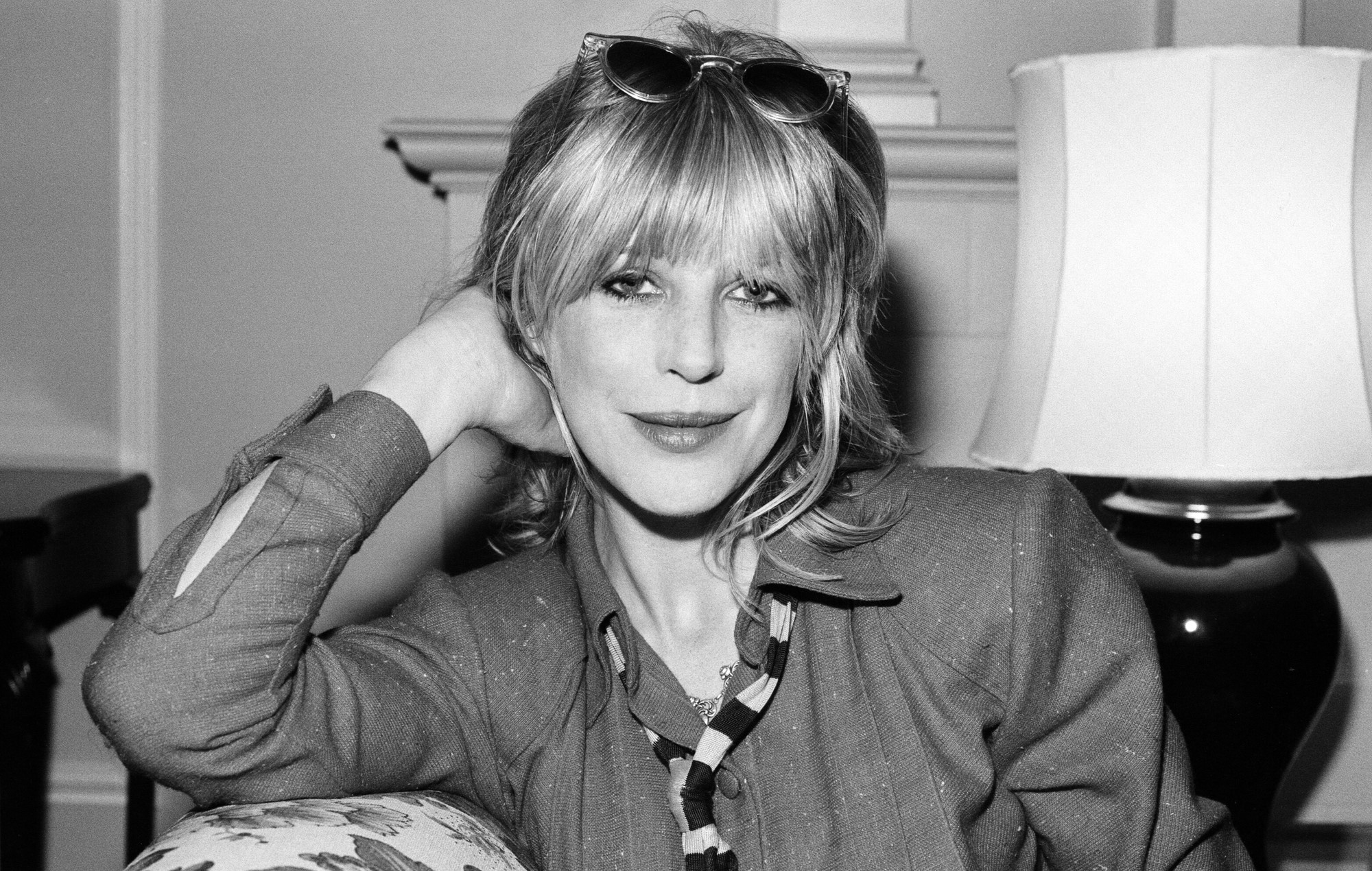 Marianne Faithfull in 1979. Credit: Allan Olley/Mirrorpix/Getty Images
Marianne Faithfull (December 29, 1946 – January 30, 2025)
14 years separate Marianne Faithfull’s quaint pop debut and her caustic 1979 new wave classic ‘Broken English’. In between, Faithfull weathered a whirlwind young life that saw her rise as a British Invasion pop star to living on London’s streets.
Faithfull, who died aged 78 following years of health problems, started her career on a major high – her first single ‘As Tears Go By’ was written by Keith Richards and Mick Jagger, and her magnetic presence in films made her a brief silver-screen star. As the 1970s arrived, however, Faithfull struggled to deal with anorexia and heroin addiction, dropping quickly from the spotlight into homelessness.
Several attempts at restarting her career resulted in the punk-influenced ‘Broken English’ – by then, Faithfull’s voice had radically transformed into a raspy howl, lending her work a newfound pathos. From then on, Faithfull’s career featured a multitude of adventurous choices – from embracing blues, rock and jazz to featuring on Metallica’s ‘The Memory Remains’ – and led to a winsome artistic partnership with Warren Ellis in her final years.
After surviving breast cancer and hepatitis C, contracting COVID-19 became one of her biggest challenges in later life. Her final album, 2021’s ‘She Walks In Beauty’, was produced as she battled the virus. Promoting the album that year, she told The New York Times after being discharged from the hospital: “It’s good for me to remember who I really am, not just an old sick person.”
Mike Ratledge, Soft Machine (May 6, 1943 – February 5, 2025)
The jazz-flecked Soft Machine was the culmination of all the instrumental prowess of the group, including a young Robert Wyatt. Having started out in the Canterbury scene, where rock music was enmeshed in an avant-garde school of thought, Soft Machine evolved from a psychedelic rock project to a jazz fusion powerhouse that met with the evolution of the genre in America at the time.
Part of what made Soft Machine’s music so entrancing was its co-founder Mike Ratledge, a keyboardist who provided crucial texture and melody to the band’s atmospheric jams via Hammond organs and electric pianos – like in the Ratledge-composed ‘Slightly All The Time’, off their 1970 album ‘Third’. Having also worked with Syd Barrett and Mike Oldfield, Ratledge departed Soft Machine in 1976 fully accomplished, changing lanes as a prolific commercial music composer. The musician died aged 81 from “a brief illness”, according to current Soft Machine guitarist John Etheridge.
Rick Buckler, The Jam (December 6, 1955 – February 17, 2025)
The Jam led the pack of Britain’s new wave of rock bands in the 1970s with their diverse style of rock music and iconic mod outfits, which were magnetic to young fans through their brief lifespan and beyond. After splitting in 1982, the band never reunited, though their six-album run was characterised by the trio’s undisputed chemistry that married their love of Northern soul with punk mischief.
For drummer Rick Buckler, who died aged 69 following a short illness, he drove the band all through the roughshod teen-angst of ‘In The City’ to the gritty funk of ‘The Gift’. After the band’s dissolution, Buckler worked behind the scenes in the music industry, while paying tribute to the band by performing their music for crowds in From The Jam, which once included his former Jam colleague Bruce Foxton.
Bill Fay (September 9, 1943 – February 22, 2025)
Bill Fay was a shining example of a rediscovered cult hero in music. In 1998, when he thought people had forgotten him, he received the shocking news that his two albums from the early 1970s – a self-titled debut and ‘Time Of The Last Persecution’ – were being reissued. “I was doing some gardening, and listening to some of my songs on cassette, and a part of me thought they were quite good. I thought, ‘Maybe somebody will hear them someday,’” he recalled in a 2012 SPIN interview.
Indeed, Fay’s brand of folk music, which varied from the pastoral to the biblical, had been rediscovered by younger fans like Wilco’s Jeff Tweedy, Jim O’Rourke, Okkervil River, and Soft Cell’s Marc Almond. It would take another 14 years before Fay would make his return to music, finding a home in indie label Dead Oceans from 2012 through to 2020 with three new albums. Fay died aged 81 from complications of Parkinson’s disease.
Roberta Flack (February 10, 1937 – February 24, 2025)
Out of the countless influential artists from the 1960s and 1970s, Roberta Flack was one who could skilfully bridge the gap between contemporary soul and folk music. Listening to ‘Killing Me Softly With His Song’, arguably her most popular single, reveals the remarkable gift of Flack in three minutes – a folk tune reconfigured as a slow-burning R&B ballad, with the airy space between notes adding dramatic heft.
Her collaborations with singer Donny Hathaway and songwriter Eugene McDaniels would provide some of her biggest hits, like ‘Where Is The Love’ and ‘Feel Like Makin’ Love’. Her gentle vocal style and multi-instrumental gifts would later inspire the neo-soul music of the 1990s, with Fugees’ own rework of ‘Killing Me Softly’ and D’Angelo’s ‘Feel Like Makin’ Love’ cover as two of its biggest examples. Flack died of cardiac arrest at age 88.
David Johansen, New York Dolls (January 9, 1950 – February 28, 2025)
The emergence of the New York Dolls was a shock to the senses to the public, even as their genetic make-up – drag fashion, ear-bleeding rock, and riotous stage presence – felt right at home in the post-Velvet Underground subculture of New York. David Johansen, who died aged 75 from cancer, led the group as its singer and chief songwriter.
While the band never fully crossed from the fringes with their first two albums – 1973’s self-titled debut and 1974’s ‘Two Much Too Soon’ – they helped galvanise the city’s punk rock music scene and its inhabitants: the Ramones, Television, Richard Hell, Blondie and Patti Smith. In particular, Johansen’s affinity for 1960s pop music, particularly that of The Shangri-Las and producer Phil Spector, lent an irresistible charm to the Dolls’ gleefully vulgar showmanship.
Angie Stone (December 18, 1961 – March 1, 2025)
In the 1990s, neo-soul was a reconfiguration of decades of American pop music that welcomed the evolution of hip-hop, forming a distinct bond between the past and present. Angie Stone made her debut in music in 1979 as part of hip-hop trio The Sequence, which was the first all-female act in the genre, before going on to become the lead vocalist of R&B group Vertical Hold in 1988. But it was her solo career as a neo-soul singer, starting in 1999 with her debut album ‘Black Diamond’, that fully fleshed out her gifts
A show-stopping vocalist with a songwriter’s workaholic lifestyle, Stone dominated live stages while also staying busy behind the scenes with other talented artists in the field. She provided background vocals for Lenny Kravitz and Joss Stone while polishing songs for D’Angelo and Erykah Badu in the studio with her penmanship. At age 63, her storied career was tragically cut short after a car crash.
Roy Ayers (September 10, 1940 – March 4, 2025)
Like his peer Herbie Hancock, Roy Ayers cut his teeth in the vibrant bebop jazz scene of the 1960s before helping to usher its transformation into new styles of music a decade later.
The vibraphonist, who died aged 84 after a long illness, started out as a sideman in his early twenties, later transitioning to band leader by decade’s end. The 1970s were a comparatively easy transition for Ayers, who happily embraced funk, disco and soul into his repertoire as leader of Roy Ayers Ubiquity.
It’s the group’s title track from the 1976 album ‘Everybody Loves the Sunshine’ that has endured through countless hip-hop samples and covers. Ayers was remarkably busy throughout his life, collaborating with Whitney Houston and Tyler, The Creator, along with touring around the world into his seventies.
Brian James, The Damned (February 18, 1951 – March 6, 2025)
Before The Damned reinvented themselves as a flamboyant goth outfit in the 1980s, they were punk rock ne’er-do-wells with their Stooges-influenced debut album ‘Damned Damned Damned’ in 1977. Lead guitarist Brian James was an essential element of the band in this period, his crackling guitar riffs lighting up anthems like ‘Neat Neat Neat’ and ‘So Messed Up’.
For the band’s second album ‘Music For Pleasure’, released later the same year, they moved from the garage to a psychedelic funhouse, with James stepping up on the axe in front of producer Nick Mason of Pink Floyd. The album’s muted reception, however, was followed by the band’s first break-up in early 1978.
The Damned would reform a little over a year later without James, who would reunite with the band in 1988 and 1989 for a string of live shows, and then for a one-off tour in 2022. James died aged 74 from undisclosed causes.
Roy Thomas Baker (November 10, 1946 – April 12, 2025)
Since he was 14, Roy Thomas Baker’s life was spent behind the mixing boards. The British music producer racked up a stunning list of clients in his twenties as an engineer, from Frank Zappa to David Bowie. However, it was his production work with Queen for their first four albums, including their signature song ‘Bohemian Rhapsody’, that established him as a studio star with an ear for the grandiose.
His tenure as a record producer included giving The Cars a fine polish for their breakout debut album, along with work for Journey, Ozzy Osbourne, Mötley Crüe, Foreigner and Guns N’ Roses. Baker died aged 78 from undisclosed causes.
David Thomas, Pere Ubu & Rocket from the Crypt (June 14, 1953 – April 23, 2025)
Post-punk may have seemed contained almost entirely in the UK, but the phenomenon and US band Pere Ubu were undoubtedly kindred spirits, thanks to the adventurousness of vocalist and songwriter David Thomas, who died aged 71 from complications of kidney disease.
Pere Ubu were the eccentric, literary brother to Thomas’ short-lived garage rock band Rocket From The Tombs. Despite both bands being labelled as punk outfits, Thomas was notably resistant to this categorisation. Instead, Pere Ubu’s off-kilter experimental rock was the perfect showcase for his uniquely maniacal energy through four decades of recorded material, one that inspired the likes of Joy Division and the Pixies.
Freddie Aguilar (February 5, 1953 – May 27, 2025)
A folk hero of the Philippines, Freddie Aguilar provided the building blocks that would form the country’s genre of popular music known as Original Pilipino Music. Aguilar’s 1978 song ‘Anak’ – written as an apology letter to his parents after leaving home to pursue music – stands as the best-selling Filipino song of all time, inspiring several covers in over 20 languages.
His career over the next two decades established him as a pillar of Asian rock music, one who embodied national pride in Filipino heritage and identity. Notably, Aguilar’s cover of the folk song ‘Bayan Ko’ would become an unofficial anthem for the 1986 People Power Revolution, the movement that put an end to the dictatorial regime of Ferdinand Marcos. Aguilar died aged 72 from multiple organ failure.
Al Foster (January 18, 1943 – May 28, 2025)
Among the laundry list of jazz extraordinaires Miles Davis worked with throughout his life, drummer Al Foster stood out as one who performed with the star during career lows, when his artistry and health came at odds with record label expectations.
Trained in hard bop and swing, Foster’s versatility made him dependable and awe-inspiring for his contemporaries. He provided the foundations for Davis and other luminaries like McCoy Tyner, Joe Henderson, and Sonny Rollins through various parts of their careers, and he even released a handful of albums as bandleader from the late 1970s onwards. His tireless work ethic led to his final album, ‘Reflections’, released in 2022. Foster died aged 82 from an undisclosed illness.
 Sly Stone in 1974. Credit: Fotos International/NBC Television/Courtesy of Getty Images
Sly Stone (March 15, 1943 – June 9, 2025)
In the music of Sly And The Family Stone lies a revolution that ignited and burned out dramatically, but not without altering the DNA of popular music.
In a startling two-year stretch from 1967 to 1969, the group produced four albums in which they transformed from flower-power soul group to a ragged music force for the counterculture with 1969’s joyous funk freakout ‘Stand!’. Two years later, its beaming optimism would be upturned by ‘There’s A Riot Goin’ On’ – if ‘Stand!’ represented a utopian daydream, ‘Riot’ was an awakening to the horrors of the present world.
Sadly, Stone’s disillusionment expressed in his music manifested as a pervasive drug addiction, which would affect his health and career going forward. This led to a decline in demand for the band, even as they struck modest success with a slew of glossy funk albums in the 1970s. Stone’s subsequent attempts at a solo career would only result in financial precarity and a disinterested music industry, even facing homelessness in the later part of his life.
Though he embarked on a legacy run in the 2000s, Stone’s health issues prevented any renewed creative spark. But his enduring vision became an explosive catalyst of inspiration across decades – from Miles Davis to Prince, Beck to D’Angelo, Iggy Pop to Beastie Boys – and his albums formed foundational groove texts for genres like hip-hop and neo-soul. Stone died this year at age 82 from chronic obstructive pulmonary disease.
Brian Wilson (June 20, 1942 – June 11, 2025)
Brian Wilson, who died aged 82 from respiratory arrest, once wrote about summer fun in California – surfing, kissing girls, riding convertibles – like it was his whole life.
Instead, from childhood, Wilson was simply obsessed with music. As teenagers, he and his brothers Dennis and Carl would form The Beach Boys in 1961 with their friends Al Jardine and Mike Love. Their streak of sunny pop hits across the first half of the decade, like ‘I Get Around’ and ‘Surfin’ USA’, defined California on the radio, becoming an American institution even as the British Invasion took over popular culture.
The Beach Boys’ 11th studio album, 1966’s ‘Pet Sounds’, would attempt to signal to the world that they were a pop band driven by genius – Wilson had spent far more time in the studio tinkering with sounds and arrangements than performing live for audiences.
- READ MORE: Brian Wilson, 1942-2025: culture-defining innovator who represented pop music’s awakening
Already, his efforts were recognised by The Beatles, who were invigorated by Wilson’s ambition by translating it into ‘Rubber Soul’ and ‘Revolver’. The Beach Boys’ planned follow-up, ‘SMiLE’, was meant to be the culmination of his experiments, like the pop epic single ‘Good Vibrations’. But Wilson’s mental health battles, which would follow him for most of his life, would leave it unfinished until 2004, when he revisited the material for his fifth solo album ‘Brian Wilson Presents Smile’.
Wilson would withdraw from the spotlight after stepping away from touring with the band in the late 1960s. Retrospective celebrations of his work have ensured he’s rarely been forgotten – it’s included the occasional solo album, band reunions, and countless citations of his work by artists, whether they were a cassette-only indie pop band or Bruce Springsteen.
His work from ‘Pet Sounds’ onwards revealed Wilson to be a far more melancholic and withdrawn writer, where liminal spaces were more appealing than crowded ones – to him, all along, summertime was an idealised myth like the American Dream, one worth a full-colour portrait or two. His layered and laboured work revealed these complexities, along with an ear for the most beautiful pop melodies put to tape.
Mick Ralphs, Mott The Hoople & Bad Company (March 31, 1944 – June 23, 2025)
The essence of beer-swilling British hard rock was shaped in part by Mick Ralphs, guitarist and founder of both Mott The Hoople and Bad Company.
A blues-rock guitarist with a penchant for power chords, Ralphs commanded Mott The Hoople through the glam rock explosion of the 1970s, working with David Bowie for their hit single ‘All The Young Dudes’. A year after its release, the guitarist kept busy by forming the “rock supergroup” Bad Company, which became a more robust showcase for Ralphs’ blues devotion.
Ralphs stayed on with Bad Company through several dissolutions until 2016. He suffered a stroke that year from which his family said he never fully recovered. He died this year at 81.
Rebekah Del Rio (July 10, 1967 – June 23, 2025)
An unforgettable scene in David Lynch’s Mulholland Drive featured singer Rebekah Del Rio performing an a capella cover of Roy Orbison’s ‘Crying’ in Spanish.
Del Rio, who died aged 57 from the fatal effects of morphine and codeine, made a name for herself for the haunting performance. Prior to that, she was a professional singer who had a flair for country and Latin pop. In the early 1990s, Del Rio had a chance meeting with Lynch, with whom she shared an agent.
Since Mulholland Drive, Del Rio has been synonymous with Lynch’s cinematic world, last performing ‘No Stars’ on his 2017 television series Twin Peaks: The Return. The song was taken from her final album, 2011’s ‘Love Hurts Love Heals’.
Lalo Schifrin (June 21, 1932 – June 26, 2025)
Jazz pianist Lalo Schifrin’s ascent as a specialist for memorable film and television scores was swift and accomplished in a matter of years.
The Argentinian dropped out of law school at 20 to study modern classical music in Paris, making the most of his time in the city by playing jazz in its clubs. A decade later, he would be tasked with composing themes for future classics: the original Mission: Impossible, Bullitt, Enter the Dragon and Dirty Harry, with Schifrin adding his cool big band flair to the explosive silver-screen action for young audiences.
Schifrin could also scare them: the composer was hired by William Friedkin to write a jarring, atonal score for his then-upcoming film The Exorcist. Its teaser trailer, featuring spine-tingling strings by Schifrin, disturbed so many that it cost him his job. He would go on to win four Grammy awards, one Latin Grammy and several Oscar nominations. Schifrin died aged 93 from complications of pneumonia.
Connie Francis (December 12, 1937 – July 16, 2025)
With her brand of easy listening pop, which sold over 100million records, Connie Francis scored several number one hits, including ‘Don’t Break The Heart That Loves You’, ‘Everybody’s Somebody’s Fool’ and ‘My Heart Has A Mind Of Its Own’. Francis’ activities slowed down after she was the victim of a violent assault in 1974, and struggled with vocal issues following nasal surgery. She would re-emerge over the next few decades with a sporadic set of albums.
However, 2025 marked an unlikely comeback for Francis: her 1962 recording of ‘Pretty Little Baby’ became popular on TikTok and reached over 100million streams on Spotify. Francis, long retired, responded to its success: “What’s viral? What’s that?” Months later, Francis died aged 87 from complications related to pneumonia.
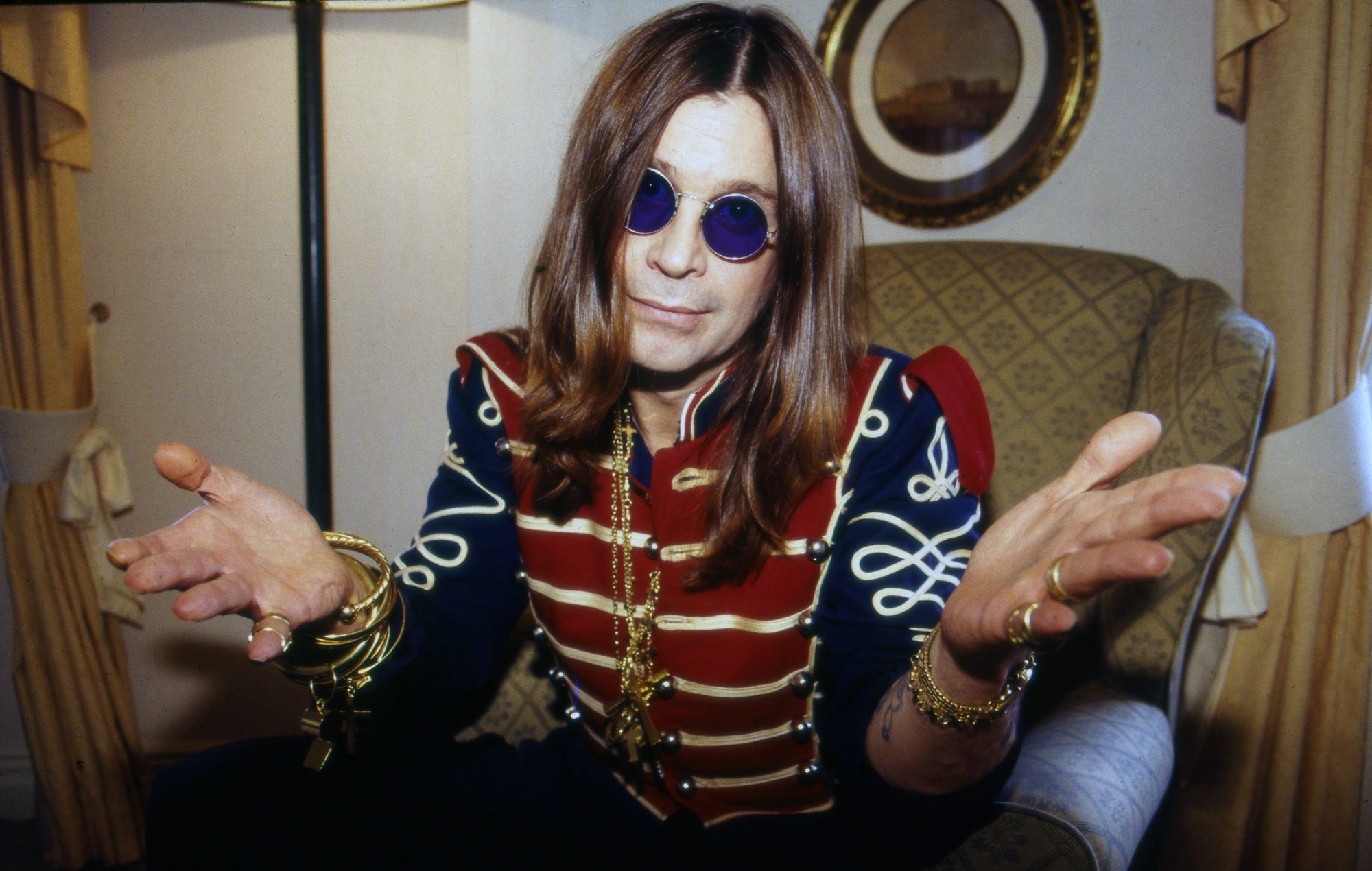 Ozzy Osbourne in 1991. Credit: Martyn Goodacre/Getty Images
Ozzy Osbourne (December 3, 1948 – July 22 2025)
Even as Black Sabbath graduated from wicked outsiders to mainstream rock stars in the 1970s, Ozzy Osbourne remained an oddball, though one who felt inseparable from the band’s murky magic.
So it was, of course, confusing to many when Osbourne left the band to pursue a solo career. What felt like alchemy in Osbourne’s outlandish wails with Tony Iommi’s earth-shattering riffs was simply one of several phases in the vocalist’s career. When he emerged with his debut album ‘Blizzard of Ozz’ in 1980, Osbourne embodied a sacrilegious brand of fantasy and macabre that he only offered in spurts with his old band.
- READ MORE: Ozzy Osbourne, 1948-2025: culture-smashing revolutionary that redefined rock and reality TV
Bat-biting aside, for a period, Osbourne achieved the rare feat of being more outlandish as he got older. In his thirties, his solo music became a regular target for angry conservatives, while his eccentricities on 2000s reality show The Osbournes would endear him to the MTV crowd. Despite persistent health problems, Osbourne managed several reunions with his Sabbath bandmates and world tours to adoring crowds.
Weeks before his death at age 76 from an acute myocardial infarction, Osbourne made the journey back to Birmingham for one final show with his band. For fans all over the world, it was bittersweet to see Osbourne leave on his own terms.
Chuck Mangione (November 29, 1940 – July 22, 2025)
As jazz continued its metamorphosis into popular music in the 1970s, a 38-year-old Chuck Mangione capitalised on the moment with ‘Feels So Good’, a sweet piece of instrumental jazz-pop that dominated the airwaves in 1978.
It made an easy listening star out of Mangione, who first cut his teeth in Art Blakey’s band a decade earlier. His newfound success kept him entrenched in the pop world, with two songs (‘Chase The Clouds Away’ and ‘Give It All You Got’) scoring the Olympics, a live concert album recorded at the Hollywood Bowl and a recurring role on King Of The Hill as a fictionalised version of himself. Mangione died in his sleep at age 84.
Brent Hinds, Mastodon (January 16, 1974 – August 20, 2025)
By their first album, Mastodon’s swampy sludge metal – which possessed just a shade of prog weirdness – was gloriously skewed by Brent Hinds’ unique vocals, a bluesy wail soaked in bourbon that could go berserk the next second. The Alabama-born guitarist’s preference for bluegrass and Zeppelin-inspired noodling – he famously hated metal – also became a crucial part of their DNA right up to this year, when Hinds would depart from the group in March.
The split was disputed – the band stated it was a mutual decision, while Hinds claimed he was “kicked out”. The tragedy that would soon follow would quash any hope of reconciliation between some of modern metal’s most creative minds, as Hinds died aged 51 from injuries sustained by a traffic collision.
Rick Davies, Supertramp (July 22, 1944 – September 6, 2025)
When British rock band Supertramp chanced upon unexpected success with 1974’s ‘Crime Of The Century’, it was Rick Davies’ smooth and unfussy vocal delivery that gave the progressive rock band an edge on the radio.
The band’s founder, keyboardist and co-songwriter, Davies led the band through their art-rock tendencies with juicy, stadium-sized hooks. These elements manifested best in 1979’s ‘Breakfast In America’, where Davies’ cheeky songwriting was met with a newfound showy falsetto and disco-inspired rhythms.
In 2015, Davies announced he was diagnosed with multiple myeloma, cancelling a Supertramp world tour. He died aged 81 due to complications from the disease.
John Lodge, The Moody Blues (July 20, 1943 – October 10, 2025)
In 1966, John Lodge joined The Moody Blues, a young rock group that began to shake off its hip beat flavours to enter the symphonic halls of London.
The bass guitarist came at the right time: the band decided to go full-tilt by recording with the London Festival Orchestra for a concept album titled ‘Days Of Future Passed’. It spawned the band’s breakout single ‘Nights In White Satin’, with newcomer Lodge credited as songwriter on two album tracks.
Lodge would stick with the band until their dissolution in 2018, penning some of their biggest hits, including ‘Ride My See-Saw’, ‘Isn’t Life Strange’ and ‘Gemini Dream’, with his bandmates. Lodge died aged 82 “suddenly and unexpectedly”, according to a statement from his family.
D’Angelo (February 11, 1974 – October 14, 2025)
With three albums issued over three distinct decades, D’Angelo had the distinct gift to meet the moment of each of them.
His 1995 debut album ‘Brown Sugar’ signified the emergence of a new form of soul music. His 2000 follow-up, ‘Voodoo’, was a masterwork of bridging generations of Black music as a new millennium arrived, while 2014’s miraculous comeback, ‘Black Messiah’, confronted the pains and injustice of the modern world.
A supreme vocalist, songwriter and multi-instrumentalist, D’Angelo had been thrust into the spotlight upon his debut – a focus that eventually made him uncomfortable when it grew beyond his control. In his music, there are multitudes – joy, lust, despair, anger, exuberance, vulnerability – and his ability to wrangle up collaborators across a wide spectrum resulted in rich sonic patchworks that sound as lively and transformative from day one.
Above all, as Lauryn Hill expressed in her tribute, D’Angelo projected “a unity of strength and sensitivity in Black manhood to a generation that only saw itself as having to be one or the other”. He died from pancreatic cancer at age 51.
Ace Frehley, KISS (April 27, 1951 – October 16, 2025)
KISS were a band made up of supersized egos – and so it was Ace Frehley who dutifully worked in service to their larger-than-life presence.
The band, founded in 1973, dominated the decade with their brand of devilish and debauched hard rock. Even as bandmates Gene Simmons and Paul Stanley dominated the spotlight, Frehley would contribute at least one song per album (save for 1976’s ‘Rock And Roll Over’) and performed lead vocals on ‘Love Gun’ cut ‘Shock Me’.
The co-founder would find himself at odds with Simmons and Stanley on the band’s direction, leaving in 1982. He would return for a reunion run in 1996 that lasted six years. In October, Frehley suffered a fall where he sustained severe head injuries. After being in a coma for over two weeks, with no improvement in his health, Frehley’s family decided to end his life support at age 74.
Sam Rivers, Limp Bizkit (September 2, 1977 – October 18, 2025)
At the peak of their powers, Limp Bizkit appeared onstage at Woodstock 1999. Before their set would inspire riots on the ground, cameras showed a young and spaced-out Sam Rivers flipping middle fingers to the crowd.
The nu-metal group had plenty to rile people up just on appearance and noise alone – it was Rivers who amplified it with driving basslines inspired by hip-hop and funk. Additionally, his introduction of drummer and childhood friend John Otto to the band ensured they had the backbone to inflict chaos.
Rivers left Limp Bizkit in 2015 to deal with liver disease from excessive drinking. He rejoined the band in 2018, just as they began to receive renewed interest and attention from younger audiences. Rivers died aged 48 from unknown causes.
David Ball, Soft Cell (May 3, 1959 – October 22, 2025)
In 2026, Soft Cell will release their final album ‘Danceteria’, which they recorded before producer David Ball’s unfortunate death at age 66, when he died in his sleep.
The synth-pop duo appeared on radio charts as a new decade dawned on music – the sound of Ball’s drum machine was the lifeforce of their 1981 debut album ‘Non-Stop Erotic Cabaret’. Despite the lush and sleek nature of the album, along with its eventual success, the album was recorded on a small budget, aided by a Synclavier on loan from producer friend Mike Thorne.
The sprightly, sleazy sounds of the album were the work of Ball’s studio wizardry, which would expand as they accrued success and bigger budgets until the end of the ’80s. And their comeback album, 2022’s ‘Happiness Not Included’, showed Ball was just as adept with modern production technology, 30-odd years since their debut.
Jack DeJohnette (August 9, 1942 – October 26, 2025)
Like many jazz musicians, Jack DeJohnette started playing professionally at a young age. The Chicago native earned his stripes in his local scene, but it was his move to New York that broadened his horizons to work with a breathless list of talent.
His move to the big city involved exploring the blurring lines between rock and jazz – it would culminate in his performance on Miles Davis’ ‘Bitches Brew’, the 1970 double album that ushered in a revolutionary sea change for the genre. DeJohnette would be a reliable player in Davis’ toolkit, even as he began to spread out into a solo career.
DeJohnette’s handprints are all over prestige records on labels like ECM and CTI, as his activities involved appearing on both solo and collaborative albums, along with performing on the albums of his peers as sideman. His style of drumming was replete with dexterity and style, and it made him one of the most in-demand drummers in jazz for decades. DeJohnette died of congestive heart failure at age 83.
Lô Borges (January 10, 1952 – November 2, 2025)
In ‘Clube da Esquina’, the 1972 album by Lô Borges and Milton Nascimento, the duo performed in resistance to the violence and inequities under Brazil’s dictatorship at the time. It features a stunning palette of folk, psych-rock and baroque pop sounds that was at odds with the country’s pre-eminent choice of music, bossa nova.
At 20, Borges was just beginning his career with ‘Clube da Esquina’. It was a fully formed peek into his strength as a vocalist, resembling a nomadic troubadour and a songwriter. After releasing his self-titled debut album the same year, he left his career behind in Rio de Janeiro to spend his life on the road as a hippie for months.
When he returned, Borges would continue making music, feeling renewed, and remained prolific up to this year with his 17th solo studio album ‘Céu de Giz’. He died from multiple organ failure at age 73.
 Mani performing live onstage in 2000. Credit: Graham Knowles/Redferns
Mani (November 16, 1962 – November 20, 2025)
The short-lived reign of The Stone Roses was arguably held together by bassist Mani, real name Gary Mounfield – not just in the music, where his mammoth basslines could blow out speakers with the touch of an EQ knob, but also in the band’s tumultuous and drug-filled lifespan.
It was likely in the man’s temperament: when news about Mani’s death unfolded, tributes poured in not just about his talent, but his personality. “The moment [you] met Mani [you] loved him,” wrote Primal Scream bassist Simone Butler, who took over the reins from the musician when he left the Glaswegian rock band in 2011.
- READ MORE: Gary “Mani” Mounfield, 1962-2025: baggy bass hero whose melodies made the Madchester movement
Mani was an important architect in the iconic sound of the Stone Roses’ debut album – he desired the throwback sound of The Dukes Of Stratosphear by bringing in producer John Lackie, while his basslines amid the band’s psychedelic pop were its strongest link to the rave underground. As Rough Trade put it in their tribute, Mani was “the perfect example of how a bassist can be the beating heart of a band”. He was 63.
Jimmy Cliff (July 30, 1944 – November 24, 2025)
The global reach of reggae music would not have been the same without Jimmy Cliff. In 1972, Cliff recorded the soundtrack to crime film The Harder They Come, in which he portrayed the infamous criminal Vincent “Ivanhoe” Martin. Cliff’s impassioned performance, on both the album and film, made him a worldwide star. But he barely stopped there.
The singer seized the opportunity with a full career dedicated to bringing reggae and Jamaican culture to radio charts overseas – his many hit singles include ‘You Can Get It If You Really Want’, ‘Sitting in Limbo’, and a cover of ‘I Can See Clearly Now’ for Disney film Cool Runnings. His 1969 song ‘Many Rivers To Cross’ would also be covered by Cher and UB40. Cliff died at age 81 from pneumonia.




 English (US) ·