
 1 month ago
21
1 month ago
21


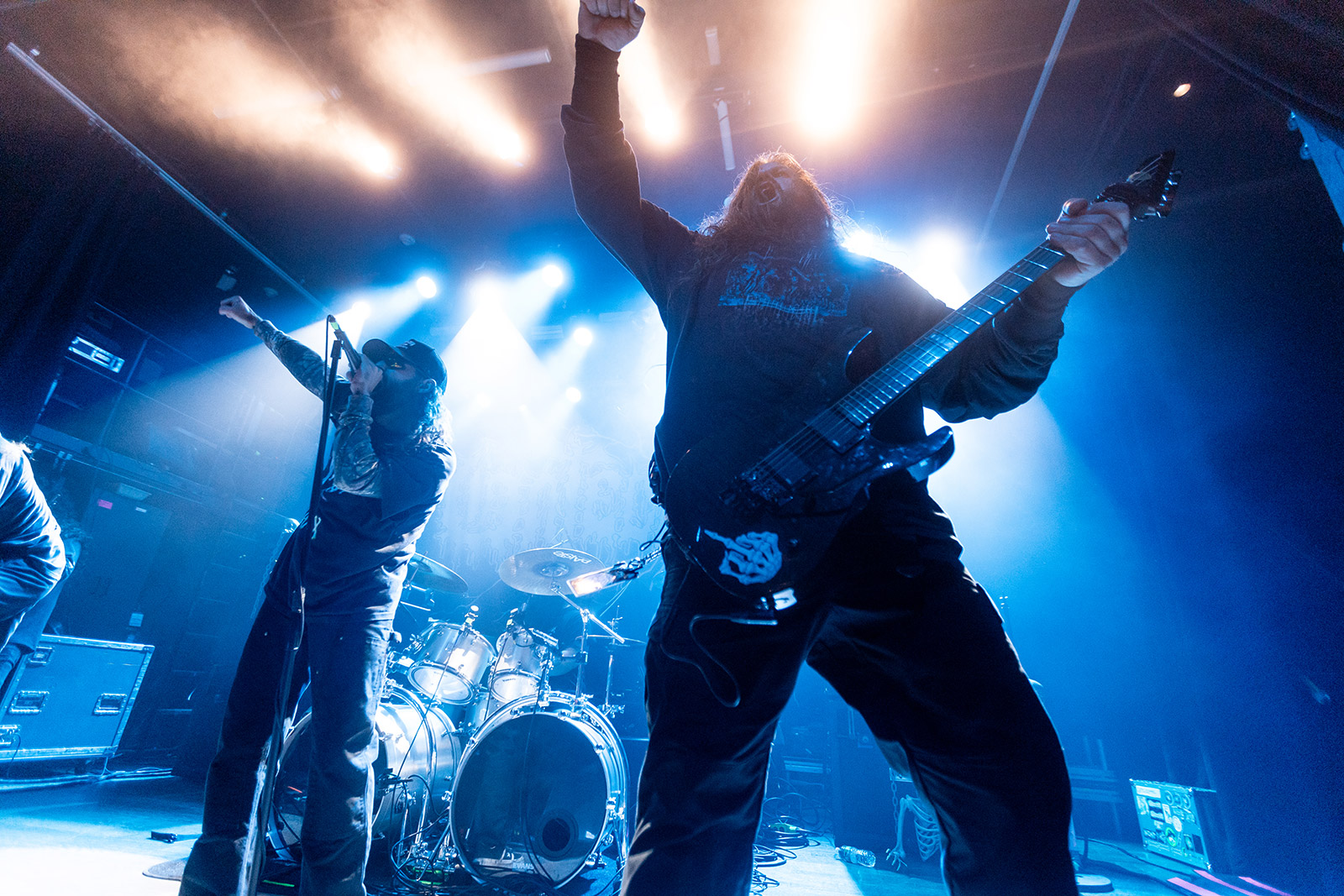
Original Photography by Annie Gunn
In April 2010, when Ramesh Srivastava announced his band's dissolution, he summarised Voxtrot’s short-lived career as a “long, simmering build, explosion, and almost instantaneous decay.”
The simple description was apt for the five-piece who, since forming in their hometown of Austin, Texas in the early 2000s, had found themselves cradled in the hype of the noughties blog era. With a handful of critically acclaimed EPs garnering the indie pop group a cult following, Voxtrot were picked up by Playlouder Records, a UK imprint of Beggars Group. “It was a big step for us. That was the big leagues,” Srivastava recalls, looking back with a warm fondness for the group’s bright-eyed, initial ascent.
He’d been only 22 when Voxtrot signed their record deal, 23 when they released their much-anticipated debut album, and 24 when the label dropped the band. “Some stuff went really well and some stuff we didn't meet certain expectations. We had never been through that process before,” he reflects, noting the weighty challenge of those whirlwind two years. “In retrospect, I see how lucky we were to have that chance. That's not an opportunity every band gets. By the end of that, once we had made our debut album with the record label and it didn't meet expectations, we were just I think a bit shell-shocked.”
With the future of Voxtrot unclear and its members under intense pressure, the decision to call it quits was mutual. “It was really hard to be organically creative,” Srivastava explains of the aftermath. “It felt like by the time we got to 2010 that there was nowhere to go. It felt like all the juice that could be got from the band had been got and it was over. So we decided to disband.” What followed was the start of a new chapter for Srivastava, who began recording his first solo record amid stints spent in Austin, Berlin, New York, and Los Angeles while working odd jobs to get by. “I was living in LA on and off [and] was trying to get involved in professional songwriting with other artists and doing acting auditions, all kinds of stuff. I just felt like 'OK, Voxtrot was my first thing and that's the stepping stone to the rest of my career'.”
Get the Best Fit take on the week in music direct to your inbox every Friday
“Every year for the previous seven years somebody had brought up [a reunion tour] and I was always the person to say no,” Srivastava shares with a laugh. “Everybody else was interested, for the most part, and I was always like, ‘no, I have a solo career, it’ll kill the momentum…” Despite his reservations, it took a decade and the COVID lockdowns to change his mind. In 2020, he found himself staying at a friends’ out-of-action Airbnb in New Orleans with plenty of time on his hands to write and reminisce. "That’s when I started really going down the rabbit hole of thinking about Voxtrot and looking at social media of other people's posts about Voxtrot,” he shares – eyerolling at being another band with a ‘because of COVID’ answer to give. “It was during that time I was there that I one day just emailed everybody like ‘if you guys want to do this, let’s do it’.”
Fast-forward to Voxtrot’s 2023 reunion tour and Srivastava now knew he wanted the band to be heading towards a second phase. “It’s like dating, or it’s like most professional relationships where you can’t force somebody’s hand,” he admits, nodding to the spark of hope that the tour had fanned. “Everybody in the situation has to decide of their own accord that they want to invest themselves in it, you know?... I just had to be zen about it, knowing that at the end of the tour we would make a decision on the final night, basically to vote whether to make another album or not.” It’s no surprise which way the cards fell.

18 years on from the release of their self-titled debut, Voxtrot are now set to usher their second album out into the world. Across 11 tracks, Dreamers in Exile lights up with the confidence and maturity of a band who have lived another life in the space between records. “In our very early material it’s a lot of, or almost entirely, romantic love,” Srivastava explains, referencing the EPs that first launched the group into the limelight. “As the band continued with the self-titled album… it’s more just my psychological world. But, having had all these years, a whole lifetime between then and coming back, with this [album] I was working to try and strike the balance of representing my feelings and my interior world as well as what's interesting about the rest of the world. The world out there, you know?”
In finding this middle ground, Voxtrot’s new record feels intricately woven with Srivastava’s own lived experience. While he notes that Voxtrot is a “fun band” and its main purpose is to be entertaining and “create a fun album listening experience,” he also emphasises that he wanted ”to have more of myself and more of my experiences as a minority present in the music.” Pointing to album opener “Another Fire” as an example of how he’s chosen to show up unabashedly as himself, he highlights a line in the first verse: “they judge the brown skin / like birth was my sin”.
“That is not something I would ever have put in a Voxtrot record previously because I always wanted to keep it light,” he confesses, recalling how his ex-boyfriend was the first to point out the lyric’s politically-charged nature. “I think in general with this ‘Voxtrot 2.0’ I had made the conscious decision to, first of all, always talk in interviews and in the song lyrics about being gay. Like, to not be so ambiguous [and] to actually make a point of like, not being ambiguous, you know?” he explains. “And I guess discussion of experience as a brown person falls in that category too.”
This decision to remain true to himself in Voxtrot “2.0” (as he affectionately refers to the band post-reformation) is a topic the songwriter often returns to when discussing the influences behind Dreamers in Exile. On string-laden ballad “Babylone” for instance, he found inspiration in Yves Saint Laurent and Pierre Bergé’s creatively supportive relationship, musing on the parallels to his own experience with a past boyfriend and the residual love left behind. “[It’s] a good example of the kind of thing I was inspired by for this record,” Srivastava elaborates.
“I was inspired by these people throughout history and throughout art and entertainment who have that fire and have lived these crazy lives, a lot of them queer people too… it's just so obvious that that was their destiny, their reason for being, because well into their old age they were just driven by this fire to create.” It’s a notion he finds himself relating to as well, noting: “I would say one of my best qualities, or one of my defining qualities, is that I maintain that fire. Even through many years of disappointment and many years of like, professional difficulty in eating humble pie… I still feel this intense creative fire and it's kind of driving me all the time.”
At its core, there’s an enthusiastic sense of freedom bubbling within Voxtrot’s new record – which notably the group are self-releasing on their own record label this time around. It’s perhaps best explained by way of the album’s name, or more specifically its titular track: “Dreamers in Exile”. Inspired by Martin Ritt's 1961 movie Paris Blues, starring Sidney Poitier and Paul Newman as American jazz musicians in 1960s Paris, Srivastava muses, “I like this idea of thinking about people being able to bloom creatively in the freedom of being somewhere else, or being in exile… You have people like me, creative, gay, biracial kids growing up in Texas in a very conservative time where they get to go somewhere else and become the thing that they really are, because there’s the freedom to expand.”
Drawing a parallel between the creative, bohemian setting of the film and his own early years at university in Glasgow, Scotland, he continues: “I moved there and I kind of got to start a new life… I showed up and I could just be gay from the first day. Like nobody knew me, so it wasn’t like I had to reveal something; I just showed up and just was gay.” For the songwriter, finding what he describes as “the right fertile ground” is key for freedom, and in turn creativity – a place free from preconceived notions where reinvention is coming home to yourself.
In a sense, Srivastava has come full circle – making the decision to show up as his true self in a renewed Voxtrot in the same way his 19-year-old self once showed up in Glasgow. Yet, despite his apparent self-confidence, he’s quick to admit he still battles an internal fear. Pointing to “Rock & Roll Jesus”, a track that sets its crosshairs on the cult of celebrity, he explains, “even having a minor amount of celebrity as I’ve had, in coming back into Voxtrot 2.0 I’ve felt fear doing interviews, fear interacting with people on social media… I want to be out there, I even enjoy it, but it’s scary, you know? I was hesitant to write that song because I was like, ‘is it too heavy? Is it too off-brand?’ And then I also just thought, ‘am I the person that should be making statements, cultural statements?’ But in the end I was like, ‘no, it’s important to talk about the things you’re observing in culture’.”
When it comes to his own relationship with fame, Srivastava’s perspective has evolved over the years. “What I learned the first time is that it's really easy to get wrapped up in it. Like to get to the [place] where it feels like you need it,” he admits. “If attention or fame goes away from you, it feels like the end of the world and it’s like a full blown identity crisis… and that’s the road I went down before.” Having spent the years following Voxtrot’s disbandment working “so many humbling jobs”, it seems he’s reconciled with what once may have felt like two opposing forces: the desire for a successful music career and wanting to maintain his sense of self.

As Srivastava discusses the observations that have found their way onto Voxtrot’s new record, it’s hard to ignore the keen self-awareness that penetrates his outlook. When questioned, he smiles: “for the last eight years at least I was like only reading spiritual texts. I went full blown into just every modality of spirituality you can imagine where, for a long time, I thought I would never get on stage again or be thinking about or talking about fame or notoriety because it seems like just the opposite of what any human is supposed to do in their life.”
But, as time passed and he began playing shows once more – first just with his solo project and then with Voxtrot again – his outlook began to shift. “I started to see that if you’re born with a gift, and in my case the gift is music, you actually have, I would say, an obligation to share that with the world,” he grins. “That is not just me being a shallow person who needs fame to be happy. Like, that is a good impulse and, as my therapist said, that’s the universe or God or whatever you want to call it speaking through… It’s like that impulse is divine to an extent, you know? Not sounding too over the top, but that’s something you have to follow… I try and follow my bliss. I follow where my instinct is leading me with songwriting.”
Shifting his gaze to what’s next for the group, Srivastava and his bandmates are set to kick off their US tour next month, with UK/EU dates freshly announced for the second half of the year. On what he envisions for Voxtrot’s future, Ramesh Srivastava is comfortable letting the universe guide him. “There's probably doors that are going to open that I just can't even visualise or anticipate,” he answers with a composed smile. “So, there's no choice but to live in the moment. That's it.”














 English (US) ·