
 1 month ago
27
1 month ago
27


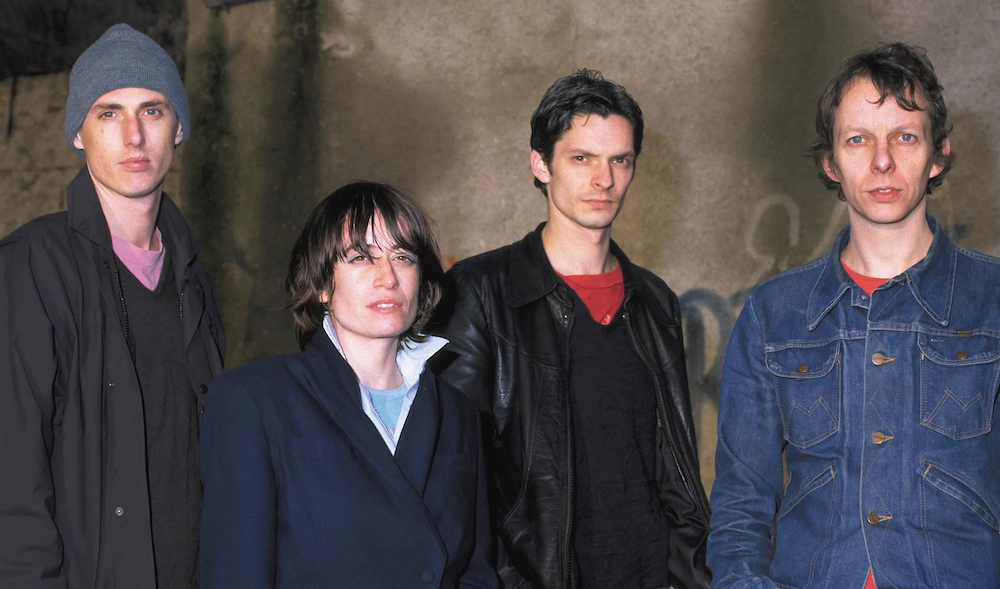
Lead photos by Mark Lapriore
Pile seems like a band in the wrong generation – in all the right ways.
Vocalist and lyricist Rick Maguire admits his band would have always preferred to take a more old-school approach with their music distribution. He dreams of being able to promote Pile’s music through Bandcamp and physical copies alone, with streaming very much a secondary – or even nonexistent – priority.
“The thing that’s very in vogue right now is taking one’s music off from Spotify, which has been a conversation I’ve been having for years with the band – because the service is just not good,” Maguire states frankly. That’s because Pile wouldn’t just pull their distinct, explorative catalogue from Spotify; they’d pull it from every streaming platform. “Not being on streaming at all is definitely a test: ‘how much are people willing to go out of their way to listen to our music?’ It’s interesting now to see there be this collective turn on streaming – a desire for an ecosystem that is more artist friendly,” he says.
The gradual societal turn on streaming should have happened years ago, when bigger artists like Bjork and Prince started calling out the unfair compensation and the impact of the internet on music consumption – but here we are. The payout-per-stream from many of the leading platforms is a lot less than a fraction of a penny: the equivalent of walking up to a musician on the street and tipping them by cutting a fiver into hundreds of pieces in front of their eyes and only handing them a shard of what used to be. But it’s an interesting question, and almost feels mystifying coming from the mouth of ‘Rick-From-Pile,’ a nickname that later became a solo moniker, both to its professional benefit and personal detriment.
Get the Best Fit take on the week in music direct to your inbox every Friday
When Pile started in the late 2000s, accolades and nods from the press would have accelerated album sales, a sizable difference in the payout from record sales than album streams. Now? It pushes streams. “The industry as it relates to social media was different,” he says. It’s counterintuitive that the frontman of this critically successful band has to wonder whether they could truly go all out. Yet reflecting on the difference in the music landscape from the band’s origins in 2009 to today allows for a clearer understanding. “It was pretty much just Facebook, and it wasn’t great, but it wasn't so dominant that if you toured without it, that you wouldn’t be able to make any [connections],” Maguire explains of their beginnings. “There was still enough room for you to just go out and make connections with people and hang out.”
While touring in vans cross-country with numerous people in one cramped space, there was never a hindrance in Pile’s stride and their steadily relentless tour schedule. They were always a formidable force that never really slowed down or stopped, regardless of touring’s emotional or personal toll. “There is this tightrope walk between both maintaining a sensitivity in the world but also opening yourself up and steeling yourself for whatever might get thrown at you,” Maguire admits across from me in a cafe in Dublin on a hazy winter’s day. He’s bundled up from the biting wind outside. There feels as if there is a parallel between touring and social media, and the ritual in presenting yourself to others – sometimes the most acceptable and dazzling parts, other times the more realistic and mundane.

Maguire walked this familiar tightrope on all nine Pile records, including their newest, Sunshine and Balance Beams, revealing too much, or not enough. The record itself contemplates the light we must find when we teeter on the fine line of self-destruction in search of societal acceptance.
Despite this metastasising worry of oversharing or not sharing enough, either online or in person, Pile’s influence was never overstated in the alt-rock scene: bands like Speedy Ortiz cite them as one of their favourites, and their fanbase has gone out of its way to consume the band’s material for over a decade – through live shows, Bandcamp purchases, ordering physical copies – reassuring that the band could make it without streaming platforms if they made the jump. The societal acceptance of Pile is far grander than Maguire theorises, their image and outward presentation to others something people identify with deeply.
Get the Best Fit take on the week in music direct to your inbox every Friday
“I wanted to do a record that people [who] have been fans of us for a while will be able to get into, but also to have the production be at a higher level,” Maguire tells me. “It’s a better presentation of what we do.” With a free-flowing structure that reverberating guitars and playful melodies rest on, Pile’s sound eloquently dances alongside synths and strings, broadening their appeal to more than the average post-punk head. There’s an individual element within the group for everyone, regardless of taste or background. Pile doesn’t quite please in the same way a modern pop act may only be marketed towards one age group, or an old-school blues artist another.
Rather, their fascinating, multigenerational sound means their LPs sit on the shelves of people of all ages. They have a fanbase filled with people like my dad, a man with a CD and vinyl collection far beyond people’s wildest dreams and terabyte hard drives filled with music – a man who used to starve himself in college by only eating egg salad sandwiches so he could afford to buy LPs. Pile’s fanbase has the entirety of their ten-year discography sitting on the shelves – whether they’re born in the mid ’50s, like my dad; the late ’80s, like my brother; or the early ’00s, like me. All because Maguire is unafraid of confronting the mundane aspects that plague each and every person; afraid of performance, but afraid of not being seen: “I think for this one, I just kind of went with it.”
An unconscious exploration, “the approach was mainly to have a strong focus on sequence, what the order of the songs [is], and also leaning into the band element,” Maguire elaborates. Pile, a project that was originally Maguire’s brainchild, ended up recruiting drummer Kriss Kuss and bassist Matt Connery at different intervals in their early career, building off of the new-age synth-wave music that Pile originally produced, adding more of a bite. “The previous record was very much informed by production and thinking about songs in that way and trying to subvert my own techniques for songwriting, being able to identify whatever those were, and trying to duck and dodge and everything I would do that was a comfortable strategy for me.”
As much as Pile’s legacy serves them, their newest record is a stepping stone – to push the envelope further, to evolve, to try something new, to use their music and unexpected turns to grasp people’s attention in the same way music did long before streaming and social media took the reins of the music industry and fried our attention spans. It’s familiar to those who have experienced life before the introduction of the internet, and a breath of fresh air for those who have only lived in the digital age. Sunshine And Balance Beams confronts the prevalence of social media performance and social anxiety, soundtracked by a limitless expanse of expressive guitars and bursting choruses, reinforcing the intergenerational love for a band that has been one of the key valves in keeping the heart of alt-rock pumping.
Sunshine And Balance Beams is out now via Sooper Records














 English (US) ·